Startups in 2026 face a highly competitive digital landscape where speed and precision dictate market survival. To validate ideas quickly and secure early funding, founders must hire an MVP app development company that understands both rapid execution and long-term scalability. A Minimum Viable Product is no longer just a bare-bones prototype; it is a strategic, user-ready application designed to test core business hypotheses while delivering genuine value to early adopters.
Partnering with the right development team ensures your product is built on a robust technical foundation, incorporates modern user expectations, and is positioned for sustainable growth. This guide outlines exactly what to expect, how to evaluate potential partners, and the critical steps to take when preparing to launch your startup application.
Why You Need to Hire an MVP App Development Company in 2026
The definition of a viable product has evolved significantly. Today, users expect seamless interfaces, instant load times, and intelligent features, even from early-stage applications. Attempting to build an MVP with a fragmented team of freelancers often leads to technical debt, missed deadlines, and a product that fails to resonate with the target audience.
When you hire a dedicated MVP app development company, you gain access to a unified team of product strategists, UI/UX designers, and engineers. This collaborative approach ensures that your product strategy aligns perfectly with technical execution. Furthermore, established agencies understand the nuances of modern cross-platform frameworks, allowing you to deploy to both iOS and Android simultaneously without doubling your development budget.
Another critical advantage is launch readiness. A specialized agency does not just write code; they prepare your application for the market. This includes integrating analytics, setting up app store optimization (ASO) foundations, and ensuring compliance with industry-specific regulations from day one.
Core Deliverables from a Top-Tier MVP Partner
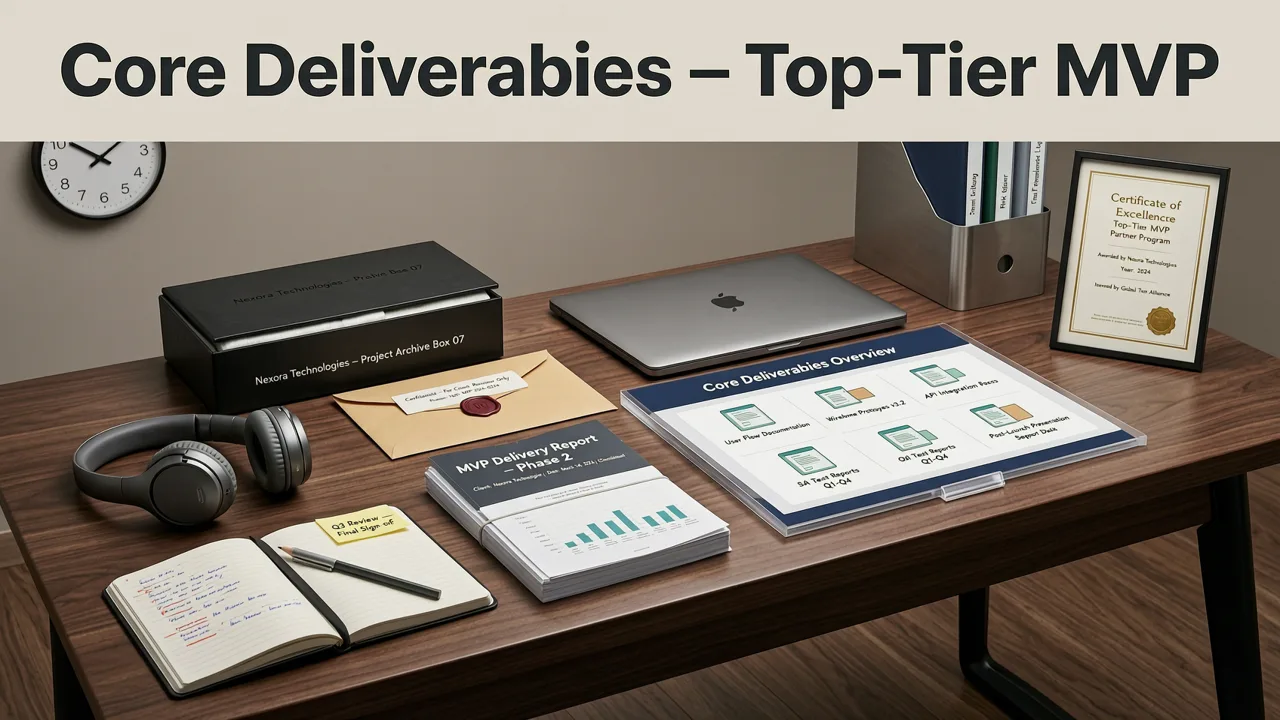
When evaluating potential partners, it is essential to look beyond basic coding services. A comprehensive MVP engagement should cover the entire product lifecycle. Here are the core deliverables you should expect:
Strategic Discovery and Product Definition
Before a single line of code is written, the agency should help you refine your concept. This involves market research, competitor analysis, and defining the core feature set that will solve your users' primary pain points. The goal is to strip away unnecessary features to focus on the unique value proposition.
User-Centric UI/UX Design
Design is a critical differentiator. Your partner should deliver interactive wireframes and high-fidelity prototypes. This phase validates the user journey and ensures the interface is intuitive, accessible, and visually aligned with your brand identity.
Agile Engineering and Architecture
The engineering phase should prioritize scalable architecture. Whether utilizing advanced cross-platform frameworks or native development, the codebase must be clean, documented, and structured to support future feature additions without requiring a complete rewrite.
Quality Assurance and Launch Support
Rigorous testing across multiple devices and operating systems is non-negotiable. Post-development, the agency should assist with App Store and Play Store submissions, initial marketing integrations, and post-launch monitoring to catch and resolve any immediate bugs.
How to Evaluate and Hire an MVP App Development Company
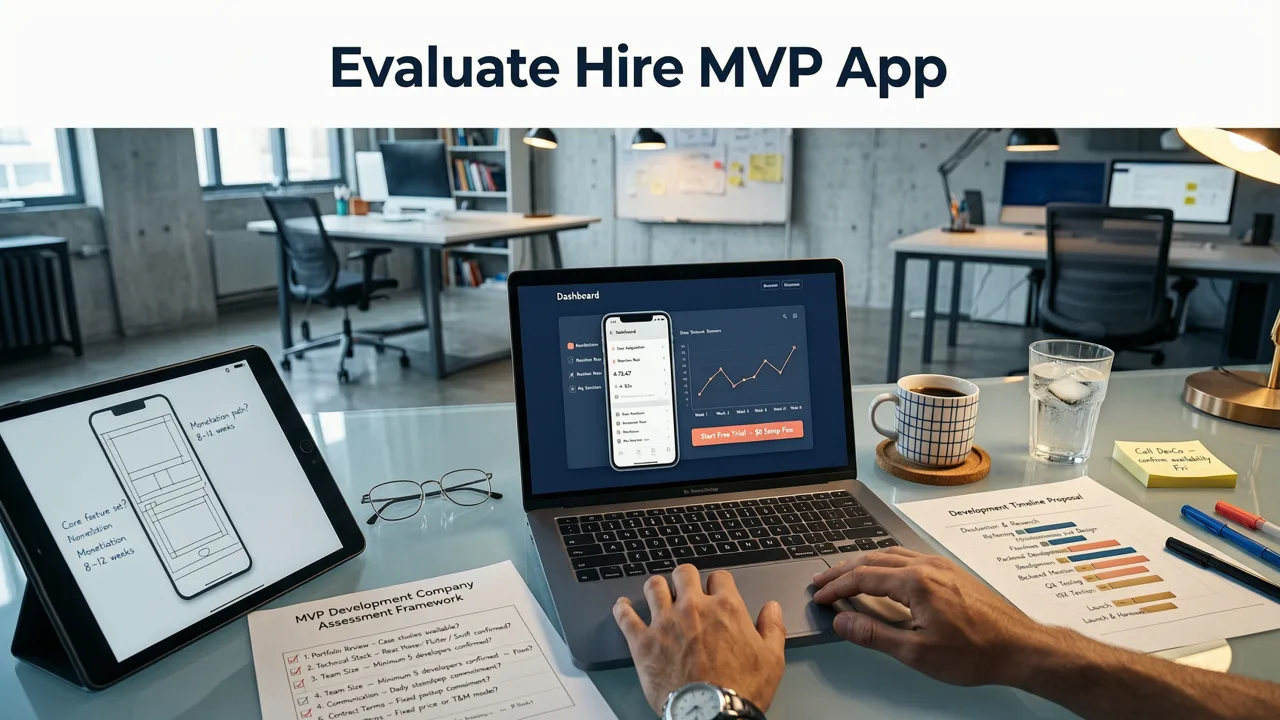
Selecting the right partner is a high-stakes decision that will shape the trajectory of your startup. The selection process requires a careful assessment of technical capability, industry experience, and cultural fit. For a deeper dive into vetting technical teams, you can explore our detailed resource on how to choose a mobile app developer in 2026.
When interviewing agencies, focus on their approach to product discovery. Ask how they handle scope changes and how they prioritize features when budget constraints arise. A reliable partner will act as a strategic consultant, pushing back on features that do not serve the core MVP objective.
Additionally, review their portfolio for experience in your specific niche. An agency that has successfully launched products in fintech, healthcare, or e-commerce will inherently understand the regulatory and user-experience challenges unique to those sectors.
Understanding MVP App Development Costs and Timelines
Budgeting accurately is one of the most challenging aspects of startup planning. Costs vary based on feature complexity, design requirements, and the chosen technology stack. For a detailed breakdown of pricing models, refer to our cross-platform app development cost guide.
To help you visualize the investment and time required, here is a standard breakdown of the MVP development phases:
| Development Phase | Primary Activities | Estimated Timeline | Cost Allocation |
|---|---|---|---|
| Discovery and Strategy | Market research, feature scoping, technical architecture planning. | 2 to 4 weeks | 10% - 15% |
| UI/UX Design | Wireframing, prototyping, user testing, and final visual design. | 3 to 5 weeks | 15% - 20% |
| Core Engineering | Frontend and backend development, API integration, database setup. | 8 to 14 weeks | 45% - 55% |
| QA and Testing | Functional testing, security audits, performance optimization. | 2 to 4 weeks | 10% - 15% |
| Deployment and Launch | Store submissions, ASO setup, analytics integration. | 1 to 2 weeks | 5% |
This structured approach ensures transparency and helps prevent budget overruns. By locking in the scope during the discovery phase, both the startup and the development agency maintain a clear understanding of the deliverables.
Navigating Compliance and Industry-Specific MVPs
Not all MVPs are created equal. If your startup operates in a highly regulated sector, your development partner must possess deep domain expertise. For instance, building a financial application requires strict adherence to security protocols, data encryption, and regional compliance standards.
Startups in the financial sector should prioritize agencies with a proven track record in secure environments. You can learn more about the specific requirements for these platforms by reviewing our guide on fintech web development services for secure apps. Similarly, if you are specifically targeting the financial sector for your mobile product, consulting insights on finding the top fintech app development agency in 2026 will help you narrow down your search.
Healthcare, travel, and on-demand delivery apps also carry unique compliance and operational requirements. An experienced agency will integrate these considerations into the initial architecture, ensuring your MVP is legally compliant and operationally viable from the first release.
The Standard MVP Development Lifecycle
Understanding the lifecycle of your project helps you manage expectations and maintain alignment with your development team. The process generally follows these sequential stages:
- Technical Discovery: The team translates your business goals into technical requirements, selecting the appropriate technology stack and defining the database schema.
- Design Iteration: Designers create user flows and interactive prototypes. Feedback loops with stakeholders ensure the interface meets user needs before development begins.
- Agile Sprints: Engineering is broken down into two-week sprints. Regular demos allow you to see working software, provide feedback, and adjust priorities if market conditions change.
- Integration and Testing: Third-party services, payment gateways, and analytics tools are integrated. The QA team conducts rigorous manual and automated testing.
- Launch and Iterate: The app is deployed to the stores. Post-launch, the focus shifts to monitoring user feedback, analyzing data, and planning the next iteration of the product.
Positioning Your MVP for Sustainable Growth
Launching the MVP is just the beginning. The true value of an MVP lies in the data it generates. By tracking user behavior, retention rates, and feature adoption, you can make informed decisions about where to invest your next round of funding.
A forward-thinking development partner will build your MVP with scalability in mind. They will implement modular architecture, ensuring that when you are ready to add advanced features like AI-driven personalization or complex backend integrations, the existing codebase can support the expansion without collapsing under technical debt.
Making the Final Decision
Choosing to hire an MVP app development company is a pivotal step in your startup journey. The right partner will not only write code but will also challenge your assumptions, refine your product strategy, and guide you through the complexities of the modern app ecosystem.
Focus on transparency, industry expertise, and a collaborative mindset. By aligning with a team that shares your vision for growth and quality, you set the foundation for a product that not only launches successfully but thrives in the competitive market of 2026 and beyond.
Ready to transform your concept into a market-ready application? Explore the comprehensive mobile and web development services offered by Devsrank to build a scalable, user-focused MVP that drives real business results. Contact our team today to start your product discovery phase and take the first step toward launching your startup successfully.
Frequently Asked Questions
What is the primary goal of an MVP in 2026?
How long does it typically take to build an MVP app?
Should I choose native or cross-platform development for my MVP?
What happens after the MVP is successfully launched?
Related topics
Need expert help?
Turn these insights into a better digital product.
Share your goals with our team and get a practical plan for design, development, performance, or growth.
Start a conversation