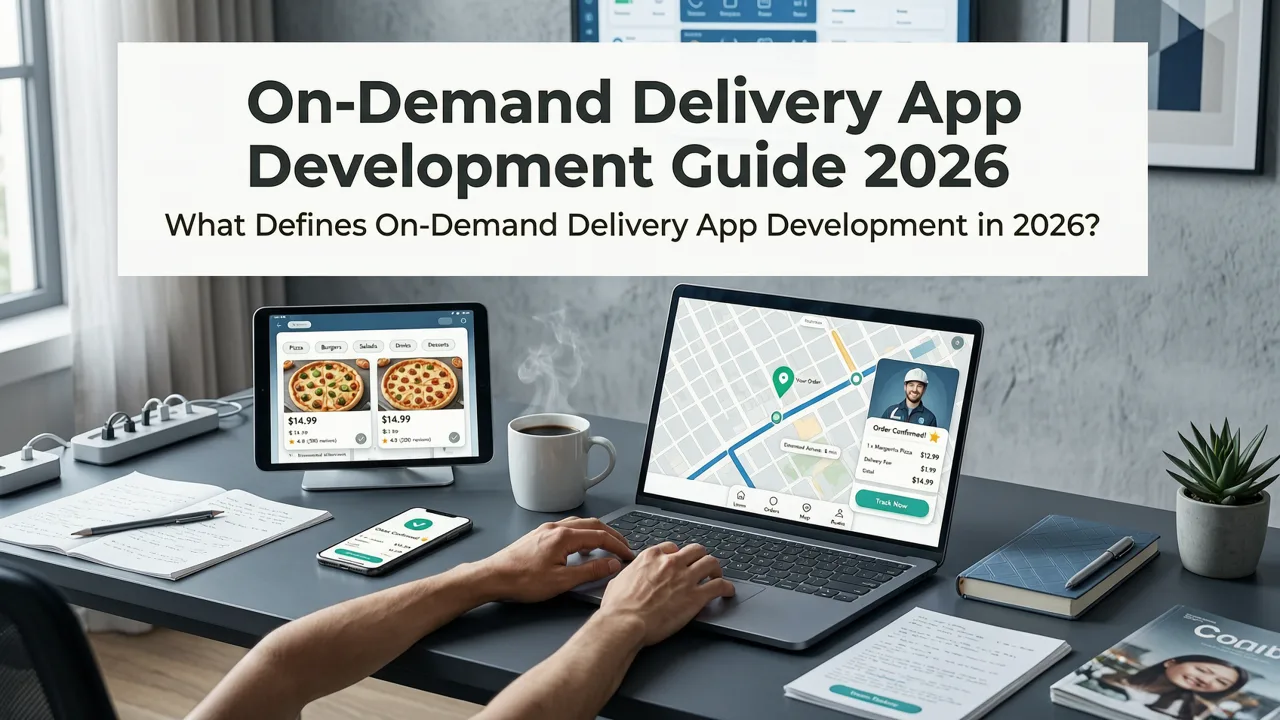
What Defines On-Demand Delivery App Development in 2026?
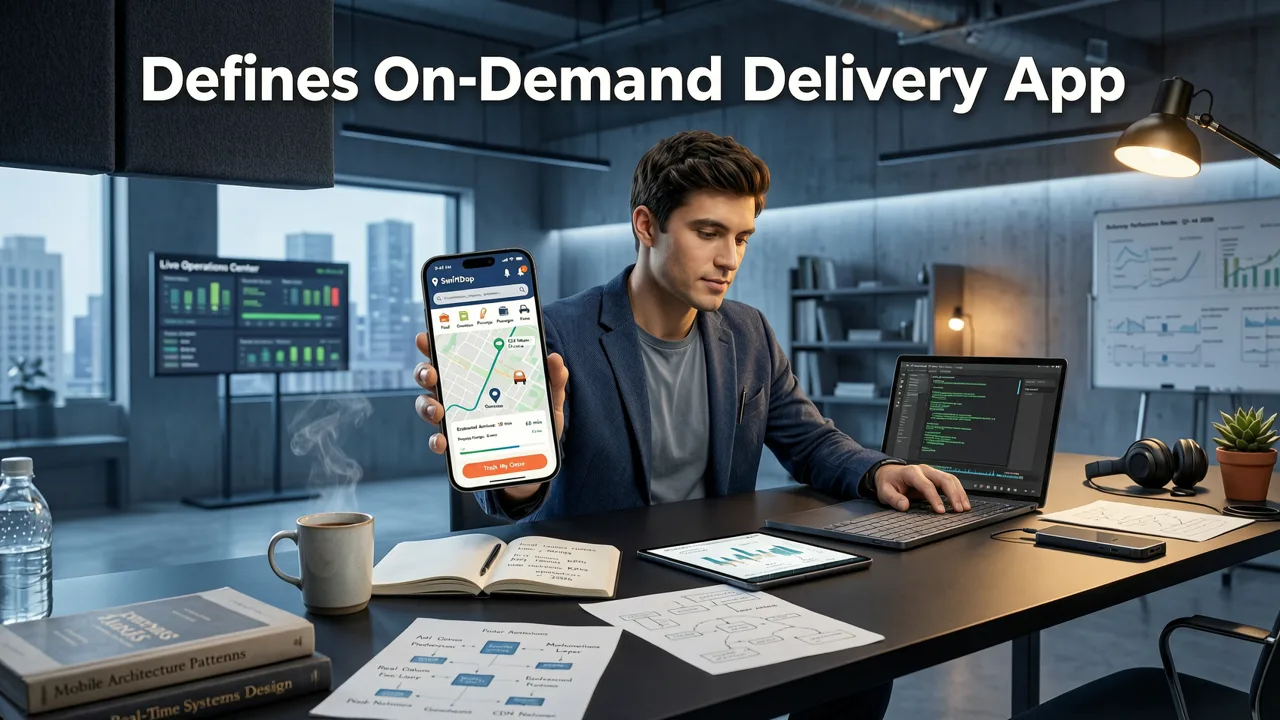
Building a delivery platform in 2026 requires more than just connecting buyers with drivers; it demands a rigorous focus on real-time logistics, scalable architecture, and seamless user experiences. This on-demand delivery app development guide breaks down the exact steps, features, and technology choices required to launch a competitive product in today’s market.
The logistics landscape has evolved significantly. Modern consumers and businesses expect hyper-local fulfillment, predictive ETA accuracy, and sustainable routing options. For startups and growing enterprises, success relies on moving beyond basic map integrations to build intelligent courier dispatch systems that adapt to traffic, weather, and demand spikes in real time.
Core Features for a Successful Delivery Platform
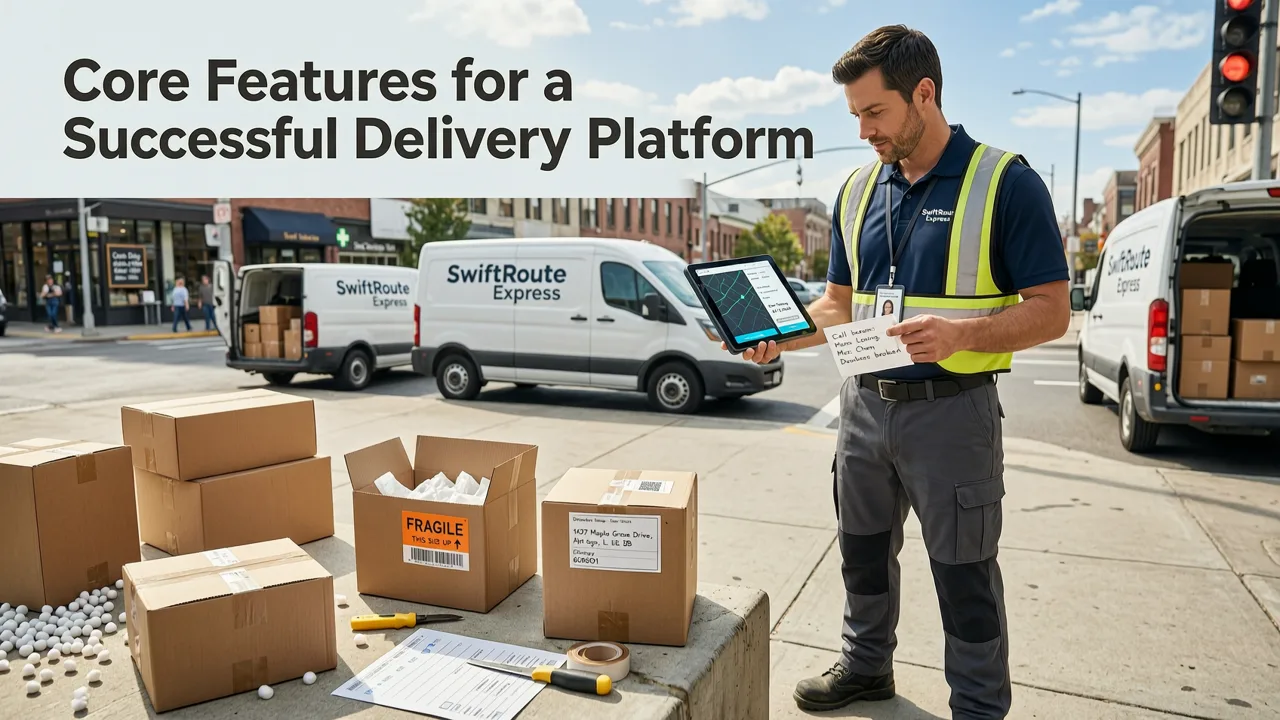
A robust on-demand delivery ecosystem typically consists of three distinct interfaces: the customer app, the courier app, and the admin dispatch panel. Each requires a tailored set of features to ensure smooth operations.
Customer-Facing App Features
- Smart Search and Filtering: Allow users to find products or services using AI-driven recommendations and location-based filtering.
- Real-Time Order Tracking: Provide live map updates with accurate ETAs using advanced geofencing technology.
- Flexible Scheduling: Enable users to choose between immediate dispatch or scheduled time slots.
- Secure Multi-Payment Gateways: Support digital wallets, credit cards, and buy-now-pay-later options with tokenized security.
Courier and Driver App Features
- AI-Driven Routing: Optimize delivery paths dynamically to reduce fuel consumption and improve delivery times.
- Earnings and Shift Management: Give drivers clear visibility into their daily earnings, incentives, and available shifts.
- Proof of Delivery: Implement photo capture, digital signatures, or OTP verification to confirm successful handoffs.
- In-App Navigation and Communication: Integrate direct calling and masked messaging to protect user and driver privacy.
Admin and Dispatch Panel Features
- Fleet Management Dashboard: Monitor driver statuses, locations, and performance metrics from a centralized web portal.
- Dynamic Pricing and Commission Engine: Adjust surge pricing automatically based on demand and manage platform commission rates.
- Heatmaps and Analytics: Visualize high-demand zones to strategically position drivers and optimize last-mile delivery.
- Customer Support CRM: Handle disputes, refunds, and inquiries efficiently with integrated ticketing systems.
Choosing the Right Tech Stack in 2026
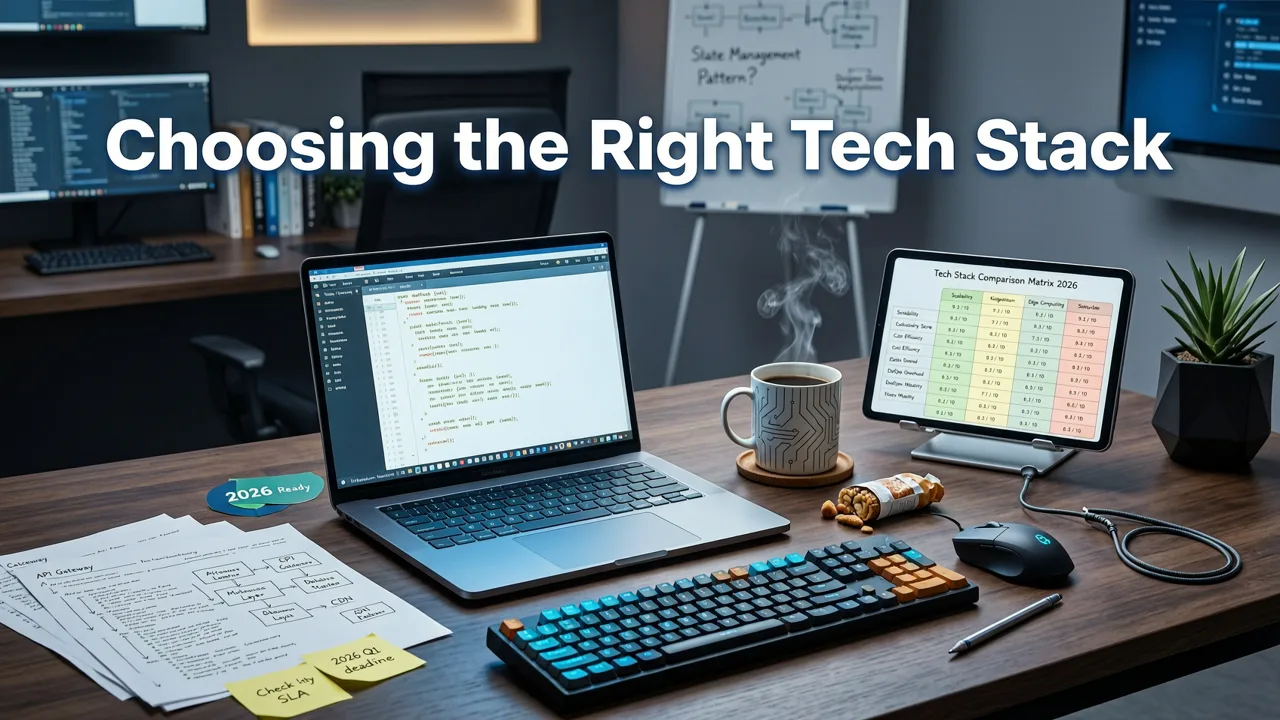
Selecting the correct technology stack is critical for performance, scalability, and time-to-market. In 2026, the industry heavily favors cross-platform architecture for the mobile interfaces to maintain consistency and reduce development overhead.
Cross-Platform vs. Native Development
For most delivery startups, building with frameworks like Flutter or React Native is the most strategic choice. These tools allow teams to deploy to both iOS and Android from a single codebase without sacrificing the smooth animations and responsive interactions required for map-heavy applications. For a deeper dive into evaluating these technologies, explore our breakdown of the top cross-platform software development frameworks in 2026.
If your business model requires deep hardware integration—such as specialized barcode scanning or augmented reality warehouse navigation—a native approach or a hybrid model utilizing cross-platform app development services with native modules may be necessary.
Backend and Cloud Infrastructure
The backend must handle thousands of concurrent WebSocket connections for live tracking. Node.js and Go are highly effective for managing these real-time data streams. For the database layer, a combination of PostgreSQL for relational data (users, orders, payments) and MongoDB for flexible document storage (product catalogs, driver logs) provides optimal performance. Cloud infrastructure should leverage AWS or Google Cloud, utilizing auto-scaling groups to handle traffic spikes during peak delivery hours.
Step-by-Step On-Demand Delivery App Development Guide
Executing a delivery app launch requires a structured methodology. Rushing into coding without a solid foundation often leads to costly pivots later.
1. Market Research and Product Strategy
Before writing a single line of code, define your unique value proposition. Are you focusing on grocery, pharmacy, or B2B freight? Understanding your specific niche dictates your feature set. If you are a founder without a technical background, this phase is critical. Reviewing resources like the software development guide for non-technical founders can help you align your business vision with technical execution.
2. UI/UX Design and Prototyping
Delivery apps require frictionless user journeys. The design phase should focus on minimizing the number of taps required to place an order. Create interactive prototypes to test the courier onboarding flow and the customer checkout process. Prioritize accessibility and high-contrast modes, as drivers often use the app in varying lighting conditions.
3. Engineering and Integration
Adopt an agile engineering process. Break the project into sprints, starting with the core MVP features: user authentication, product browsing, cart management, and basic dispatch logic. Integrate third-party APIs for maps, SMS notifications, and payment processing early in the cycle to identify any compatibility issues.
4. Testing, Launch, and ASO
Conduct rigorous QA testing, focusing heavily on location services, battery consumption, and offline capabilities. Once the app is stable, prepare for launch. App Store Optimization (ASO) is vital; ensure your metadata, screenshots, and keywords clearly communicate your platform's value to drive organic downloads.
Navigating Compliance and Security in Delivery Apps
Security is non-negotiable, especially when handling payment data and personal locations. All data in transit must be encrypted using TLS 1.3, and data at rest should be secured with AES-256 encryption.
Compliance requirements vary by industry. For instance, if your platform facilitates the delivery of prescription medications or medical supplies, your application must adhere to strict healthcare privacy regulations. In these scenarios, integrating HIPAA-compliant mobile app development services ensures that patient data and delivery records are handled according to federal standards.
Cost Factors and Timeline for Delivery Apps
The investment required to build an on-demand delivery platform depends on feature complexity, design requirements, and the chosen technology stack. Below is a general comparison of project scopes and their associated timelines and investment ranges.
| Project Scope | Core Features Included | Estimated Timeline | Investment Range |
|---|---|---|---|
| Basic MVP | Customer app, driver app, basic admin panel, standard map integration, single payment gateway. | 3 - 4 Months | $40,000 - $70,000 |
| Mid-Level Platform | All MVP features plus AI routing, dynamic pricing, multi-payment support, advanced analytics, and push notifications. | 5 - 7 Months | $80,000 - $130,000 |
| Enterprise Solution | Full ecosystem with predictive logistics, multi-vendor support, custom CRM, white-label options, and high-availability cloud architecture. | 8 - 12+ Months | $150,000+ |
These estimates assume a professional agency partnership. Opting for a highly customized UI, integrating complex IoT devices for fleet tracking, or building proprietary machine learning models for demand forecasting will increase both the timeline and the budget.
Conclusion and Next Steps
Launching a successful delivery platform in 2026 requires a blend of strategic product planning, robust cross-platform engineering, and a deep understanding of last-mile logistics. By focusing on real-time performance, intuitive design, and scalable infrastructure, your business can capture market share and deliver exceptional user experiences.
If you are ready to transform your logistics concept into a market-ready product, Devsrank provides end-to-end mobile and web development services tailored for growing businesses. From initial product strategy and UI/UX design to engineering, launch, and ongoing ASO, our team helps you ship faster and scale sustainably. Contact Devsrank today to discuss your on-demand delivery app development project and build a platform built for the future of logistics.
Frequently Asked Questions
What is the most important feature for an on-demand delivery app in 2026?
Should I build my delivery app natively or use a cross-platform framework?
How long does it take to develop an on-demand delivery app?
Do delivery apps need to be HIPAA compliant?
Related topics
Need expert help?
Turn these insights into a better digital product.
Share your goals with our team and get a practical plan for design, development, performance, or growth.
Start a conversation