What Defines HIPAA Compliant Mobile App Development in 2026?
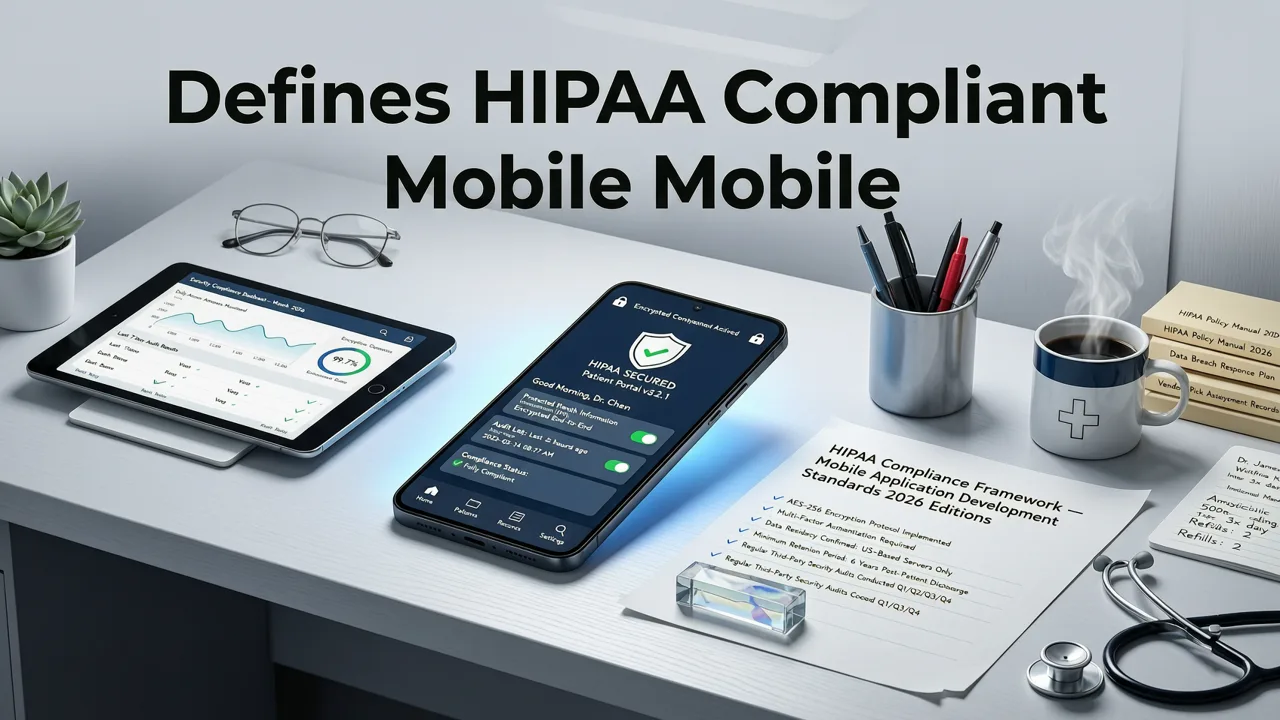
Building a healthcare application in 2026 requires more than just writing functional code; it demands a rigorous, uncompromising commitment to patient privacy and data security. If you are exploring hipaa compliant mobile app development, the primary objective is to protect Protected Health Information (PHI) while delivering a seamless, intuitive user experience. Compliance is not a final checklist item; it is an architectural philosophy that must be embedded into every layer of your product from day one.
The regulatory landscape for digital health has evolved significantly. According to the U.S. Department of Health and Human Services, the rules surrounding PHI continue to adapt to new technologies, including cloud infrastructure, edge computing, and AI-driven diagnostics. In 2026, a truly compliant mobile health application must integrate advanced encryption, granular access controls, and comprehensive audit logging natively, ensuring that security never becomes an afterthought.
Core Technical Requirements for Healthcare Apps
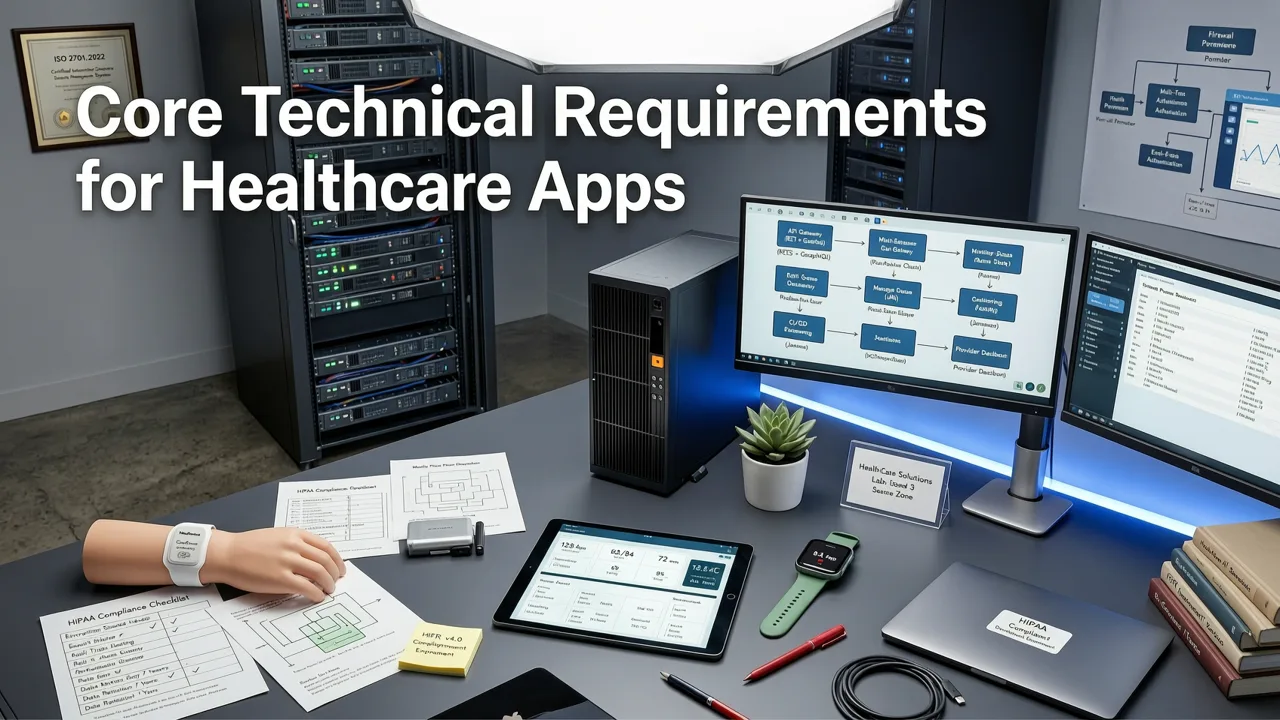
When engineering a healthcare solution, the technical stack must satisfy the strict mandates of the HIPAA Security Rule. This involves implementing administrative, physical, and technical safeguards. For mobile applications, the technical safeguards are the most visible and critical components of the development process.
Data Encryption and Transmission Security
All PHI must be encrypted both at rest and in transit. In 2026, relying on baseline TLS protocols is insufficient. Applications must utilize TLS 1.3 for data in transit and AES-256 encryption for data at rest. If a device is lost or stolen, the encrypted database should render the PHI completely unreadable to unauthorized users.
Access Controls and Authentication
Healthcare apps require robust identity management. Multi-factor authentication (MFA), biometric logins (such as facial recognition or fingerprint scanning), and automatic session timeouts are mandatory. Furthermore, the system must enforce role-based access control (RBAC), ensuring that a nurse, a physician, and an administrative staff member only see the data necessary for their specific functions.
Audit Controls and Activity Logging
Every interaction with PHI must be tracked. The application must maintain detailed, immutable audit logs that record who accessed what data, when the access occurred, and what actions were taken. These logs are critical for compliance audits and breach investigations.
Standard vs. HIPAA Compliant App Architecture
To understand the difference in development scope, consider the following comparison between a standard consumer app and a healthcare-specific application:
| Feature | Standard Consumer App | HIPAA Compliant Healthcare App |
|---|---|---|
| Data Encryption | Basic TLS for transit | AES-256 at rest, TLS 1.3 in transit |
| Authentication | Email/Password or basic OAuth | MFA, Biometrics, strict session timeouts |
| Access Management | General user roles | Granular Role-Based Access Control (RBAC) |
| Audit Logging | Basic error and event tracking | Immutable, detailed PHI access logs |
| Vendor Agreements | Standard Terms of Service | Mandatory Business Associate Agreements (BAA) |
Why Most Agencies Fail at Healthcare App Delivery

Many development agencies approach healthcare projects with the same methodology they use for e-commerce or social media apps. This fundamental misunderstanding of the regulatory burden is the primary reason healthcare projects fail, face compliance penalties, or experience severe delays.
For non-technical founders entering the digital health space, the complexity of healthcare regulations can be overwhelming. Navigating this landscape requires a partner who understands that software development for non-technical founders in the healthcare sector must prioritize strategic discovery and risk analysis over rapid feature deployment. Treating HIPAA compliance as a mere plugin or a post-development security audit is a critical mistake that compromises the entire product architecture.
How Devsrank Delivers Strategic HIPAA Compliant Mobile App Development
At Devsrank, we approach healthcare engineering as a strategic discipline. Our methodology ensures that security, usability, and scalability are balanced throughout the entire product lifecycle.
1. Strategic Discovery and Risk Analysis
Before a single line of code is written, we conduct a comprehensive risk analysis. We map out the flow of PHI, identify potential vulnerabilities, and ensure that all third-party services (such as cloud hosting, analytics, and push notification providers) are willing to sign a Business Associate Agreement (BAA). This foundational step prevents costly architectural rework later in the project.
2. Healthcare-Specific UI/UX Design
Patient-facing and provider-facing applications require distinct design strategies. For patients, the UI must be highly accessible, empathetic, and easy to navigate, often adhering to WCAG guidelines. For providers, the interface must minimize clicks and reduce cognitive load during high-stress environments. Our design team specializes in translating complex clinical workflows into intuitive digital experiences.
3. Secure Engineering and Architecture
Our engineering teams write secure code by default. We utilize secure coding practices, conduct regular static and dynamic code analysis, and perform penetration testing before launch. We also ensure that the backend infrastructure is hosted on HIPAA-eligible environments with properly configured BAAs.
Choosing the Right Architecture for Healthcare Solutions
A common question in 2026 is whether to build a native iOS and Android application or utilize a cross-platform framework. The maturity of modern frameworks has shifted the calculus for healthcare startups.
Native development still offers the highest level of performance and direct access to device-specific hardware, which can be crucial for apps integrating with specialized medical peripherals. However, cross-platform app development services have evolved to offer near-native performance while significantly reducing time-to-market and maintenance overhead.
When evaluating frameworks, it is essential to ensure that the chosen technology supports the rigorous encryption and secure storage requirements mandated by HIPAA. Modern frameworks like Flutter and React Native have robust ecosystems for secure storage and cryptographic operations, making them highly viable for secure healthcare applications when architected correctly.
Launching and Scaling Your Digital Health Product
Developing a compliant application is only half the journey; getting it into the hands of users requires a targeted go-to-market strategy. The healthcare app market is highly competitive, and visibility in the App Store and Google Play requires specialized optimization.
Standard marketing tactics often fall short in digital health. You need ASO services for startups that understand the unique constraints and opportunities of the healthcare category. This includes optimizing for clinical keywords, ensuring your app store creatives communicate trust and security, and managing reviews that reflect patient and provider satisfaction.
Furthermore, scaling a healthcare app means preparing for increased user loads without compromising security. Your infrastructure must be designed to auto-scale securely, ensuring that a sudden influx of users does not create bottlenecks or expose vulnerabilities in the data handling pipeline.
Conclusion
Building a secure, scalable, and user-friendly healthcare application requires a deep understanding of both clinical workflows and federal regulations. HIPAA compliant mobile app development is a strategic investment that protects your patients, your reputation, and your bottom line. By partnering with an agency that prioritizes security architecture and strategic execution, you can bring your digital health vision to market with confidence.
If you are ready to build a healthcare application that meets the highest standards of security and usability, Devsrank is here to help. Contact our team today to discuss your project requirements and discover how we can turn your clinical vision into a compliant, market-ready reality.
Frequently Asked Questions
What is a Business Associate Agreement (BAA) and why is it required?
Can cross-platform frameworks like Flutter or React Native be used for HIPAA compliant apps?
Does HIPAA compliance apply if the app only collects basic user data?
How often should a HIPAA compliant healthcare app undergo security audits?
Related topics
Need expert help?
Turn these insights into a better digital product.
Share your goals with our team and get a practical plan for design, development, performance, or growth.
Start a conversation