
Why Cross Platform Software Development Frameworks Matter in 2026

In 2026, the debate is no longer about whether cross-platform technology can match native performance, but rather which architecture best serves your specific business logic. Cross platform software development frameworks have evolved from compromised, bridge-heavy solutions into sophisticated, high-performance engines capable of delivering fluid, native-like experiences across iOS, Android, and the web from a single codebase.
For startups and scaling enterprises, the primary advantage remains operational efficiency. Maintaining one unified codebase drastically reduces time-to-market, simplifies long-term maintenance, and ensures feature parity across all user touchpoints. However, choosing the right framework requires looking beyond marketing claims and evaluating rendering engines, ecosystem maturity, and alignment with your team's existing expertise.
This guide breaks down the leading cross platform software development frameworks available today, comparing their technical strengths, ideal use cases, and strategic value for modern product teams.
Top Cross Platform Software Development Frameworks for 2026
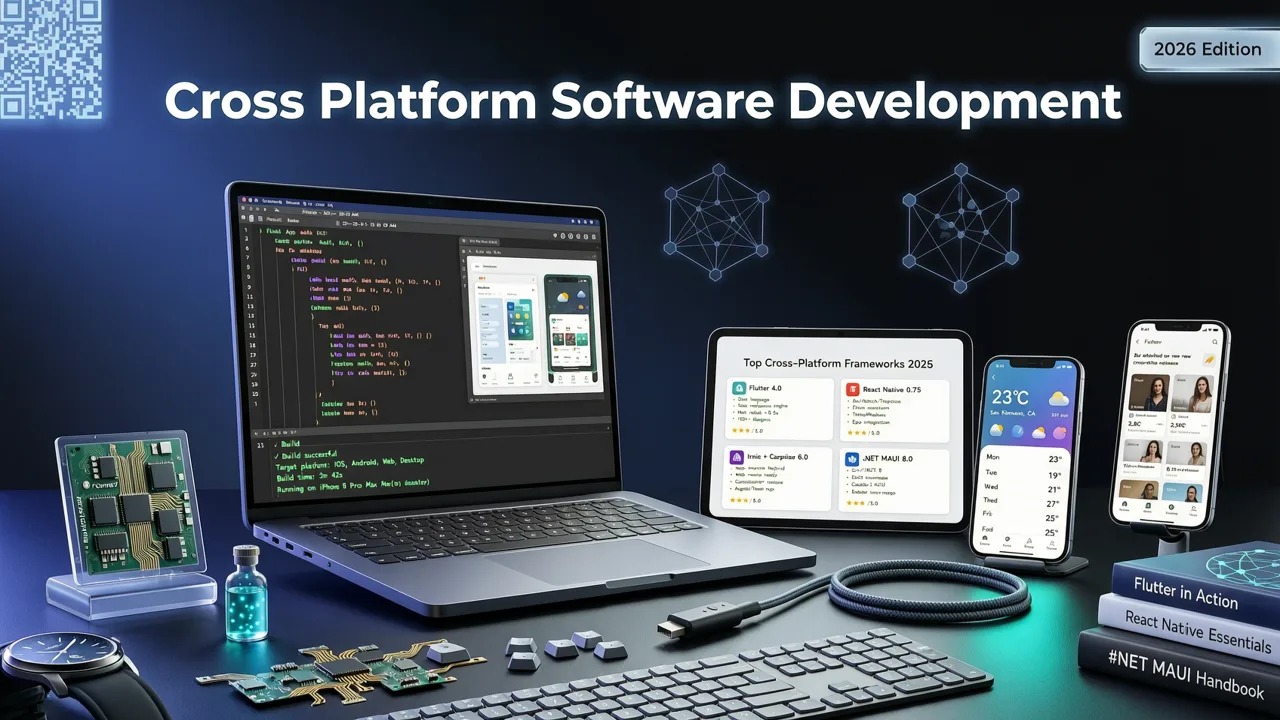
The modern mobile landscape is dominated by a few key players, each taking a fundamentally different approach to UI rendering, state management, and native interoperability. Here is a detailed look at the frameworks shaping app development this year.
Flutter: The UI-First Powerhouse
Developed by Google, Flutter continues to be a dominant force in the cross-platform space. Written in Dart, Flutter distinguishes itself by bypassing native UI components entirely. Instead, it uses its own rendering engine to draw every pixel on the screen, ensuring absolute visual consistency across devices.
In 2026, Flutter's Impeller rendering engine has matured, virtually eliminating the shader compilation jank that plagued early versions. This makes it an exceptional choice for highly branded, custom-designed applications where pixel-perfect UI is a priority. Because Flutter controls the entire rendering pipeline, developers can create complex animations and bespoke interfaces that would be difficult to synchronize using native component wrappers.
For teams looking to dive deeper into the official documentation and ecosystem, flutter.dev remains the central hub for package management, widget libraries, and community plugins.
React Native: The JavaScript Ecosystem Giant
Backed by Meta, React Native leverages the vast JavaScript and TypeScript ecosystems. Unlike Flutter, React Native relies on native UI components, acting as a bridge between your JavaScript logic and the platform's native views.
The modern React Native architecture, featuring the Fabric renderer and bridgeless mode, has significantly improved startup times and memory efficiency. This framework is ideal for teams that already possess strong web development skills, as the transition to mobile development is relatively seamless. The ability to share business logic, state management patterns, and even some UI components between a React web app and a React Native mobile app creates a powerful synergy for product teams.
Developers and technical leads can explore the latest architectural updates and best practices directly through the reactnative.dev portal.
Kotlin Multiplatform (KMP): The Native Logic Approach
Kotlin Multiplatform represents a paradigm shift in how we think about cross-platform development. Rather than forcing a shared UI layer, KMP allows developers to share business logic, data models, and networking code while keeping the UI entirely native, or optionally using Compose Multiplatform for a shared UI.
This approach is highly favored by teams that want the efficiency of shared code without sacrificing the exact look, feel, and platform-specific behaviors that iOS and Android users expect. Because the UI is compiled natively, KMP apps inherently adhere to platform design guidelines, making it a strong contender for enterprise applications and utilities where native integration (like deep system settings or complex background tasks) is critical.
.NET MAUI: The Enterprise Standard
Microsoft's .NET Multi-platform App UI (MAUI) is the evolution of Xamarin, designed for the modern .NET ecosystem. Using C# and .NET, MAUI allows developers to build native mobile and desktop applications from a single codebase.
MAUI is particularly valuable for enterprise organizations that are already heavily invested in the Microsoft stack. If your backend services are built in .NET and your internal tools rely on Azure, MAUI provides a unified development experience that simplifies hiring and code sharing across web, mobile, and desktop teams. While its ecosystem is smaller than Flutter or React Native, its deep integration with enterprise security and backend services makes it a pragmatic choice for internal or B2B applications.
Cross Platform Framework Comparison: Key Evaluation Criteria
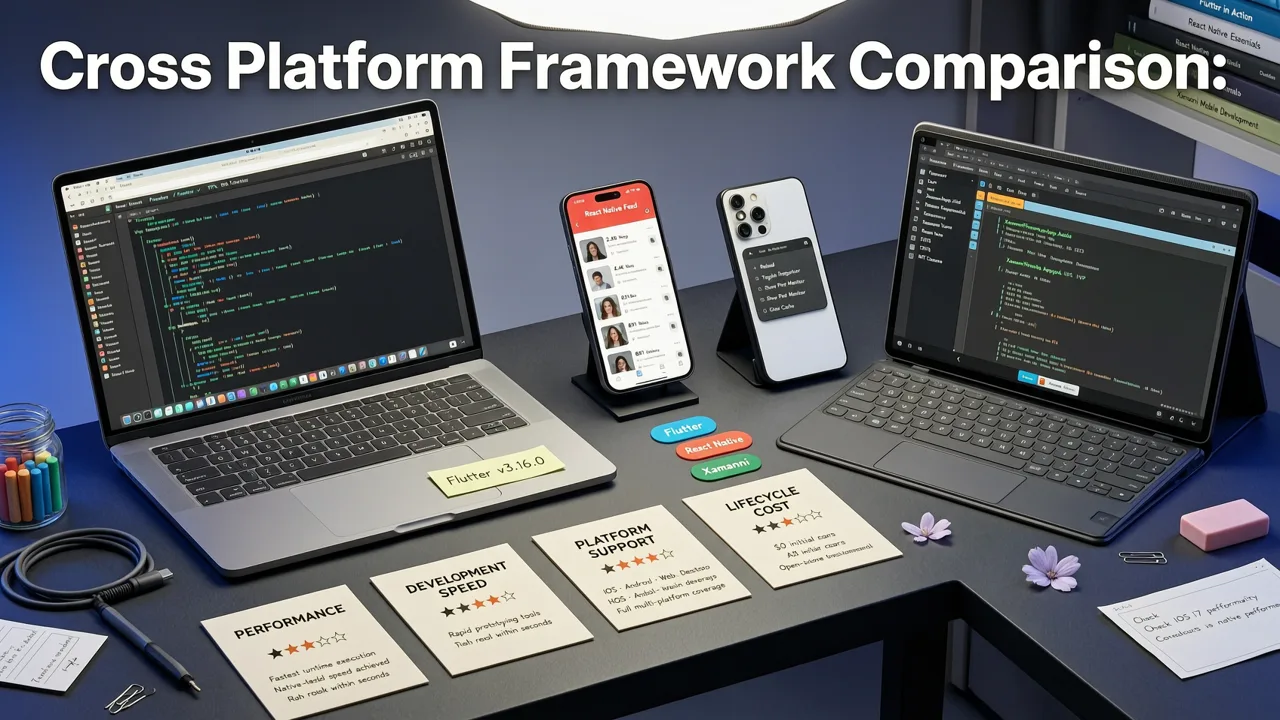
Selecting the right technology stack requires balancing performance, developer experience, and long-term maintainability. The following table provides a high-level comparison of the major frameworks to help guide your technical evaluation.
| Framework | Primary Language | Rendering Approach | Ideal Use Case |
|---|---|---|---|
| Flutter | Dart | Custom Engine (Impeller) | Highly customized UI, complex animations, startups needing rapid MVP deployment. |
| React Native | JavaScript / TypeScript | Native Components (Fabric) | Teams with web/React expertise, content-heavy apps, leveraging existing JS ecosystems. |
| Kotlin Multiplatform | Kotlin | Native UI or Compose | Apps requiring strict native platform adherence, sharing logic across iOS, Android, and backend. |
| .NET MAUI | C# / .NET | Native Controls | Enterprise B2B apps, organizations deeply integrated with the Microsoft and Azure ecosystem. |
Aligning Your Tech Stack with Business Goals
A framework is only as effective as the product strategy behind it. Building a high-performance app is just the first step; ensuring it meets user expectations and drives business growth requires a holistic approach to development and design.
Prioritizing UX in Specialized Industries
In highly regulated or complex sectors, the technology you choose must support rigorous design standards. For instance, when building in the medical or wellness space, your chosen framework must seamlessly support the strict accessibility, cognitive load reduction, and trust requirements outlined in modern healthcare mobile app UX guidelines. A framework that struggles with complex state management or accessibility APIs will hinder your ability to deliver a compliant, user-centric product.
Scaling E-commerce and Retail Experiences
For retail brands, the decision often mirrors the broader Shopify vs custom ecommerce website debate: do you prioritize out-of-the-box speed, or do you need a fully bespoke architecture to handle complex, high-volume mobile transactions? If you opt for a custom mobile app to drive loyalty and personalized shopping experiences, frameworks like Flutter or React Native excel at rendering dynamic product catalogs, managing complex cart states, and integrating with third-party payment gateways without sacrificing frame rates.
Integrating ASO and Post-Launch Growth
Engineering does not end at deployment. The architecture of your cross-platform app directly impacts your App Store Optimization (ASO) and web visibility. Ensuring your app supports deep linking, fast initial load times, and seamless web-to-app transitions is critical for user retention. Modern frameworks provide the necessary hooks to integrate analytics, attribution, and ASO tools directly into the build pipeline, ensuring your product is discoverable from day one.
Conclusion
The landscape of cross platform software development frameworks in 2026 offers unprecedented power and flexibility. Whether you choose the pixel-perfect consistency of Flutter, the vast ecosystem of React Native, the native logic sharing of Kotlin Multiplatform, or the enterprise integration of .NET MAUI, the right choice depends entirely on your team's expertise and your product's unique requirements.
Building a successful product requires more than just writing code; it demands a strategic partnership that aligns engineering, design, and growth. If you are ready to transform your product vision into a scalable, high-performance reality, explore how comprehensive mobile and web development services can accelerate your journey to market.
Frequently Asked Questions
What is the best cross platform software development framework in 2026?
Do cross platform frameworks compromise on native performance?
Can I share code between my web and mobile apps using these frameworks?
How does choosing a cross platform framework affect App Store Optimization (ASO)?
Related topics
Need expert help?
Turn these insights into a better digital product.
Share your goals with our team and get a practical plan for design, development, performance, or growth.
Start a conversation