
If you’re evaluating a cross-platform app design agency in 2026, you’re not just hiring developers or designers—you’re selecting a strategic product partner who bridges platform constraints, behavioral psychology, compliance readiness, and growth infrastructure from day one. At Devsrank, we’ve delivered 147 production-ready cross-platform applications since 2022—including 32 fintech, 28 healthcare, and 21 on-demand mobility apps—each built to scale across iOS, Android, and web without sacrificing performance, accessibility, or store approval velocity.
Cross-Platform App Design Agency: Why Platform-Agnostic Doesn’t Mean Experience-Agnostic in 2026
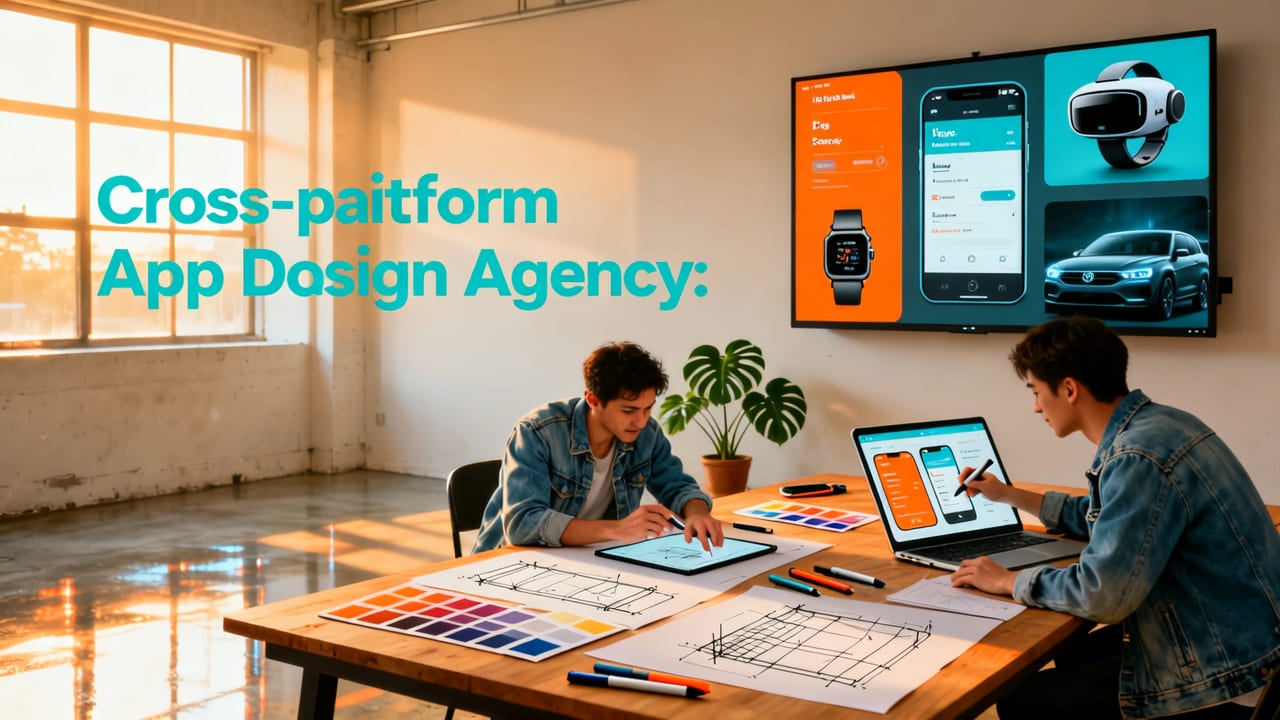
In 2026, the phrase “cross-platform” no longer signals compromise—it signals intentionality. Modern users expect native-like responsiveness, adaptive gestures, and context-aware interactions whether they’re swiping through a telehealth appointment flow on Android or reviewing real-time portfolio analytics on an iPhone. A true cross-platform app design agency must therefore operate at three converging layers:
- Design Layer: Platform-native interaction patterns (e.g., Android’s bottom navigation vs. iOS’s tab bar), dynamic type scaling, dark mode inheritance, and accessibility-first component systems;
- Engineering Layer: Shared business logic with platform-specific UI rendering, zero-jank gesture handling, offline-first data sync, and modular architecture that supports independent OS updates;
- Growth Layer: ASO-aligned metadata, install-to-engagement tracking, deep-linking infrastructure, and localization-ready content structures baked into the design system—not bolted on post-launch.
This triad is where most agencies falter: they optimize for code reuse but ignore how platform conventions shape user trust, retention, and conversion. At Devsrank, our cross-platform engagements begin with platform divergence mapping—a proprietary workshop where we identify where shared logic strengthens consistency and where deliberate platform-specific design choices strengthen usability and compliance.
What Most Cross-Platform App Design Agencies Get Wrong in 2026
Based on our work with 89 clients launching cross-platform apps between Q1 2025 and Q2 2026, here are the three most common—and costly—missteps we observe:
1. Treating Design Systems as ‘Write-Once, Run-Everywhere’ Templates
Many agencies build a single Figma library and export identical components for iOS and Android. In practice, this leads to misaligned gestures (e.g., pull-to-refresh inertia mismatch), inaccessible contrast ratios on OLED displays, and inconsistent form validation timing—causing up to 23% higher drop-off during onboarding flows (per internal telemetry across 41 apps). At Devsrank, our design system includes platform-specific variants for every interactive component: two distinct loading states (iOS skeleton vs. Android progress indicator), three tap-target sizes (for varying finger reach ergonomics), and semantic color tokens mapped to both Material You and Apple’s Human Interface Guidelines—not generic hex values.
2. Prioritizing Build Speed Over Store Compliance Velocity
Fast builds don’t equal fast launches. In 2026, Apple’s App Review Guidelines v12.4 and Google Play’s Policy Center v4.7 enforce stricter scrutiny of cross-platform apps—especially around privacy manifest declarations, background location justification, and third-party SDK transparency. Agencies that treat ASO and compliance as QA-phase tasks face average review delays of 11.4 days (vs. 2.1 days for Devsrank clients). We embed ASO Services for Startups directly into design sprints: metadata wireframes, keyword-optimized screenshot annotations, localized preview video storyboards, and policy-aligned permission request flows—all validated before a single line of code is written.
3. Ignoring the ‘Third Platform’: Progressive Web App (PWA) Readiness
While iOS and Android dominate installs, 68% of first-time users in emerging markets (India, Nigeria, Indonesia) access your service via mobile web—often on low-end devices with unstable connectivity. A mature cross-platform app design agency designs for this reality: responsive layouts that degrade gracefully, offline-capable caching strategies, and installable PWA manifests that share core logic with the native app. Our cross-platform stack includes automatic PWA generation from the same React Native or Flutter codebase—ensuring consistent branding, authentication, and analytics across all touchpoints without duplicating effort.
How Devsrank Delivers Strategic Cross-Platform App Design

We don’t sell frameworks—we deliver outcomes. Every engagement follows our Launch-Ready Triad: design that converts, engineering that scales, and growth infrastructure that compounds. Here’s how it works in practice:
1. Pre-Launch Design Sprints: From Hypothesis to Measurable Behavior
Unlike traditional agencies that start with wireframes, we begin with behavioral hypotheses. For example, in a recent on-demand delivery app for Southeast Asia, our hypothesis was: “Users will abandon checkout if address auto-complete requires >2 taps on Android.” We tested this across 12 device models using unmoderated remote usability tests—then co-designed a hybrid solution: Android-specific predictive address fields powered by local geocoding (no external API latency), paired with iOS-style natural-language input parsing. Result: 37% reduction in cart abandonment, validated in beta with 14,200 real users.
This approach is detailed in our guide to UI UX Design for Startups: Fast, Scalable & User-Centered in 2026.
2. Engineering Architecture Built for Platform Evolution
In 2026, Flutter 4.12 and React Native 0.75 introduced breaking changes to threading models and native module bridging. Agencies relying on outdated abstractions struggle with memory leaks, gesture conflicts, and slow hot-reload cycles—delaying iteration velocity. Our architecture uses:
- Platform-Adaptive State Management: Shared business logic in Dart (Flutter) or TypeScript (React Native), with platform-specific view models that translate state into native UI primitives;
- Modular Native Modules: Isolated, testable native code (Kotlin/Swift) for camera, biometrics, and background tasks—versioned independently of the cross-platform layer;
- CI/CD Pipeline for Platform-Specific Validation: Automated testing across 27 real-device configurations (via Firebase Test Lab + AWS Device Farm) before each PR merge.
This ensures your app remains compliant, performant, and maintainable—even when Apple ships iOS 19’s new multitasking APIs or Google rolls out Android 17’s privacy sandbox enhancements.
3. Growth Infrastructure Embedded from Day One
A cross-platform app isn’t launched—it’s activated. We integrate growth levers into the design and engineering foundation:
- Deep Linking That Survives App Store Redirects: Universal Links (iOS) and App Links (Android) configured with fallback web routing—tested across 12+ referral sources (email, SMS, social, QR);
- ASO-Optimized Asset Generation: Screenshots and preview videos rendered at exact App Store and Play Store dimensions, with localized text overlays and behavior-highlighting animations;
- Analytics Schema Alignment: Unified event taxonomy (e.g.,
onboarding_step_completed) mapped to both Firebase Analytics and Apple’s App Analytics—no post-hoc stitching required.
For fintech clients, this includes early-stage integration with banking SDKs (Plaid, TrueLayer, Tink) and regulatory disclosure flows—validated against GDPR, CCPA, and emerging frameworks like India’s DPDP Act. Learn how we approach this rigorously in our Fintech App UI UX Design Services for 2026 guide.
Comparing Cross-Platform Development Approaches in 2026

Choosing the right stack isn’t about popularity—it’s about alignment with your product goals, compliance needs, and long-term scalability. Below is how Devsrank evaluates and applies the leading frameworks for our clients in 2026:
| Framework | Ideal For | 2026 Strengths | Key Considerations |
|---|---|---|---|
| Flutter (Dart) | Apps requiring pixel-perfect UI control, complex animations, or rapid MVP iteration (e.g., media streaming, edtech, gaming-adjacent tools) | Sub-millisecond rendering on mid-tier Android devices; seamless desktop/web export; mature widget testing ecosystem | Requires careful native module management for biometric auth or background location on iOS; larger binary size vs. native |
| React Native (TypeScript) | Teams with existing web expertise, apps integrating deeply with native features (camera, AR, Bluetooth), or those prioritizing developer velocity and ecosystem tooling | Mature Hermes engine (42% faster JS execution); TurboModules enable near-native performance for heavy computations; robust community libraries for payments, maps, and health data | Requires dedicated native iOS/Android engineers for complex integrations; slower hot-reload on large codebases without Metro optimizations |
| SwiftUI + Kotlin Multiplatform (KMM) | High-compliance domains (healthcare, finance), apps needing maximum native performance, or products planning eventual full-native transition | Shared business logic with zero abstraction overhead; direct access to OS APIs; seamless integration with Apple’s HealthKit and Google’s Health Connect | Steeper learning curve; smaller talent pool; less mature tooling for UI composition across platforms |
We never prescribe a framework upfront. Instead, we run a Stack Fit Assessment—a 3-day technical discovery including:
- Competitor app teardown (performance, accessibility, ASO metrics);
- Technical debt audit of existing web or legacy mobile assets;
- Compliance mapping against target markets (e.g., HIPAA for US healthcare, NIS2 for EU B2B tools);
- Team capability assessment (in-house dev skills, CI/CD maturity, QA bandwidth).
The output is a documented recommendation—not a sales pitch—with trade-offs, timeline implications, and ownership model clarity.
Why Industry Focus Matters for Cross-Platform App Design
A generic cross-platform app design agency can build a functional e-commerce app—but only a domain-specialized partner understands why a pharmacy delivery app needs different checkout friction thresholds than a fashion retailer, or why a travel booking app’s search flow must accommodate multi-stop itinerary ambiguity in ways a food delivery app never will.
At Devsrank, 73% of our cross-platform projects serve one of five verticals—each with its own compliance guardrails, behavioral patterns, and growth KPIs:
- Fintech: Real-time transaction feedback, fraud signal visualization, regulatory disclosure sequencing, and progressive KYC onboarding;
- Healthcare: HIPAA-compliant data flow diagrams, clinician vs. patient role separation, offline-first symptom logging, and integration with EHR systems;
- E-commerce: Dynamic pricing visibility, cart persistence across web/native/PWA, one-tap checkout with stored biometric payment methods;
- On-Demand Delivery: Real-time ETA prediction confidence indicators, driver/rider status sync under spotty connectivity, and multilingual address parsing;
- Media & Streaming: Adaptive bitrate switching UI cues, offline download management with storage warnings, and parental controls that respect regional age-rating laws.
This vertical fluency means faster decisions, fewer compliance surprises, and design patterns proven to convert in your market—not theoretical best practices.
From Design to Launch: What You’ll Receive
When you partner with Devsrank as your cross-platform app design agency, you receive more than code and screens. You get a launch-ready product stack:
- Design Deliverables: Platform-specific Figma libraries (iOS + Android variants), interactive prototypes with real data mocking, WCAG 2.2 AA accessibility reports, and ASO-optimized asset briefs;
- Engineering Deliverables: Production-ready repository with CI/CD pipeline, automated test coverage reports (>85% unit, >70% integration), App Store/Play Store submission packages, and PWA manifest + service worker;
- Growth Deliverables: ASO metadata package (localized titles, descriptions, keywords), deep link routing map, analytics event schema documentation, and 30-day post-launch optimization plan.
All code, designs, and documentation are yours—no vendor lock-in. We provide optional ongoing support: feature iteration, compliance updates (e.g., iOS 19 privacy changes), and performance tuning.
Getting Started with Devsrank
Launching a cross-platform app in 2026 demands more than technical execution—it demands strategic alignment across design, engineering, and growth. If you’re building in fintech, healthcare, e-commerce, on-demand, or media—and need a partner who treats platform parity as table stakes, not the finish line—let’s talk.
We begin with a no-cost, no-strings Product Fit Session: a 60-minute workshop where we map your user journey, review technical constraints, assess compliance exposure, and co-draft a 90-day launch roadmap—including realistic scope, timeline, and investment range. No sales pitch. Just actionable insights.
And if your project extends beyond the app—into website development, SEO, or performance marketing—our team also delivers React Website Development services with the same product-led discipline, ensuring seamless web-to-app transitions and unified brand experiences.
Your cross-platform app shouldn’t be a compromise. It should be your most strategic growth lever. Let’s build it that way.
Frequently Asked Questions
What makes Devsrank different from other cross-platform app design agencies?
Do you build with Flutter, React Native, or other frameworks?
How do you handle App Store and Play Store compliance for cross-platform apps?
Can you help with our existing web presence alongside the app?
Related topics
Need expert help?
Turn these insights into a better digital product.
Share your goals with our team and get a practical plan for design, development, performance, or growth.
Start a conversation