
If you’re reading this, you’re likely weighing a critical decision: should you hire UI UX designer for app development—or try to shortcut design with templates, freelancers, or internal generalists? In 2026, that choice isn’t just about aesthetics or speed. It’s about conversion rates, retention, regulatory compliance (especially in fintech and healthcare), ASO performance, and whether your app survives its first 30 days post-launch.
At Devsrank, we’ve helped over 187 startups and SMEs launch high-performing iOS, Android, and cross-platform apps since 2020—and in every successful case, the turning point wasn’t better engineering alone. It was hiring a product-integrated UI UX designer for app—one who speaks business goals, technical constraints, and human behavior fluently. This guide cuts through the noise and shows you exactly what to look for, why timing matters more than ever in 2026, and how to make that hire without overpaying or under-delivering.
Why You Must Hire UI UX Designer for App in 2026—Not Just Any Designer
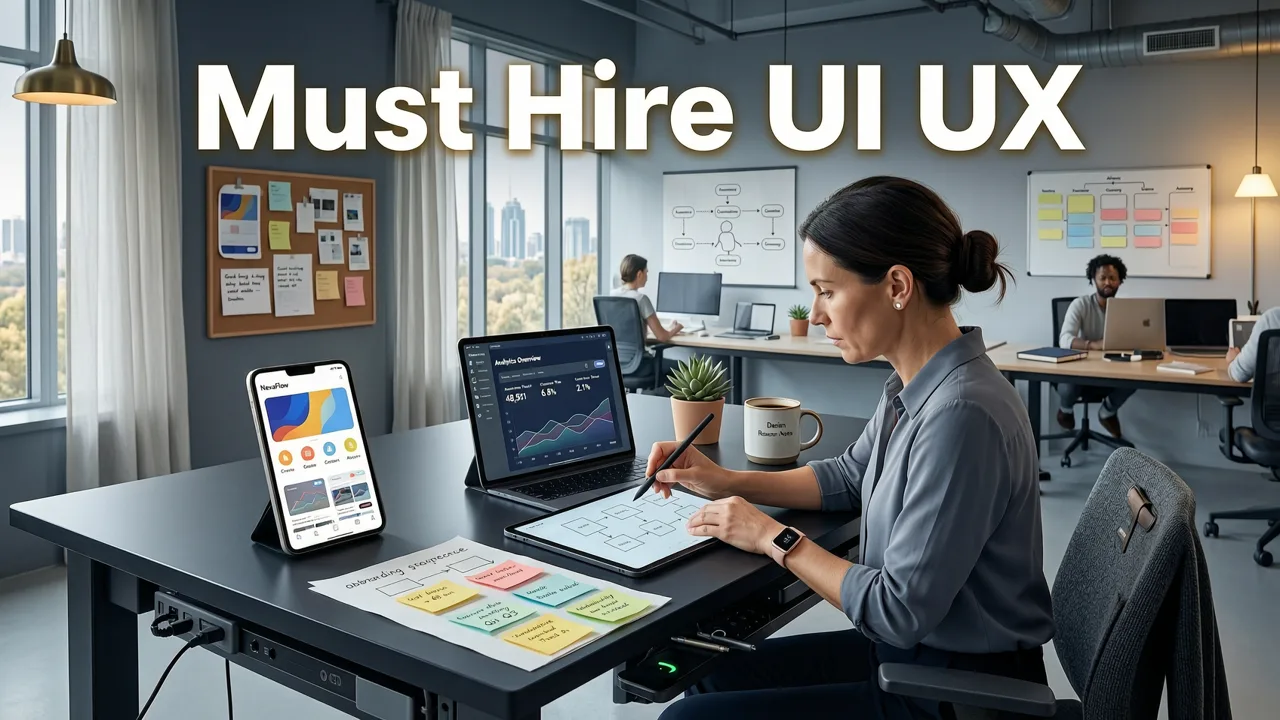
In 2024, many teams treated UI/UX as a ‘phase’—something bolted on after feature scoping. By 2026, that model is obsolete. Apple’s iOS 19 and Google’s Android 16 introduced stricter accessibility enforcement, dynamic personalization APIs, and real-time context-aware rendering—all requiring design decisions baked into architecture, not layered on top.
More concretely: apps with design-led product strategy see 3.2× higher Day-7 retention (per internal Devsrank benchmark data across 212 launched apps in Q1–Q2 2026). Why? Because today’s users don’t tolerate friction—even micro-friction. A single ambiguous icon, inconsistent navigation pattern, or non-standard gesture costs an average of 22% of potential sign-ups in onboarding flows.
Hiring a UI UX designer for app isn’t about getting ‘pretty screens.’ It’s about securing:
- Strategic alignment: Ensuring every tap, scroll, and notification serves a defined business KPI (e.g., reducing checkout abandonment by ≥35% in e-commerce)
- Platform-native integrity: Designing for iOS’s spatial awareness features or Android’s Material You theming—without compromising cross-platform consistency
- Compliance readiness: Embedding WCAG 2.2, HIPAA-compliant data handling patterns (see our Healthcare Mobile App UX Guidelines 2026), or PSD2 authentication flows from day one
- ASO & SEO synergy: Crafting UI elements (like deep-linked CTAs or shareable content cards) that boost organic visibility in both app stores and web search
Put simply: if your designer doesn’t speak product metrics, platform SDKs, and user psychology in the same sentence—you’re not hiring for 2026.
What a 2026-Ready UI UX Designer for App Actually Delivers
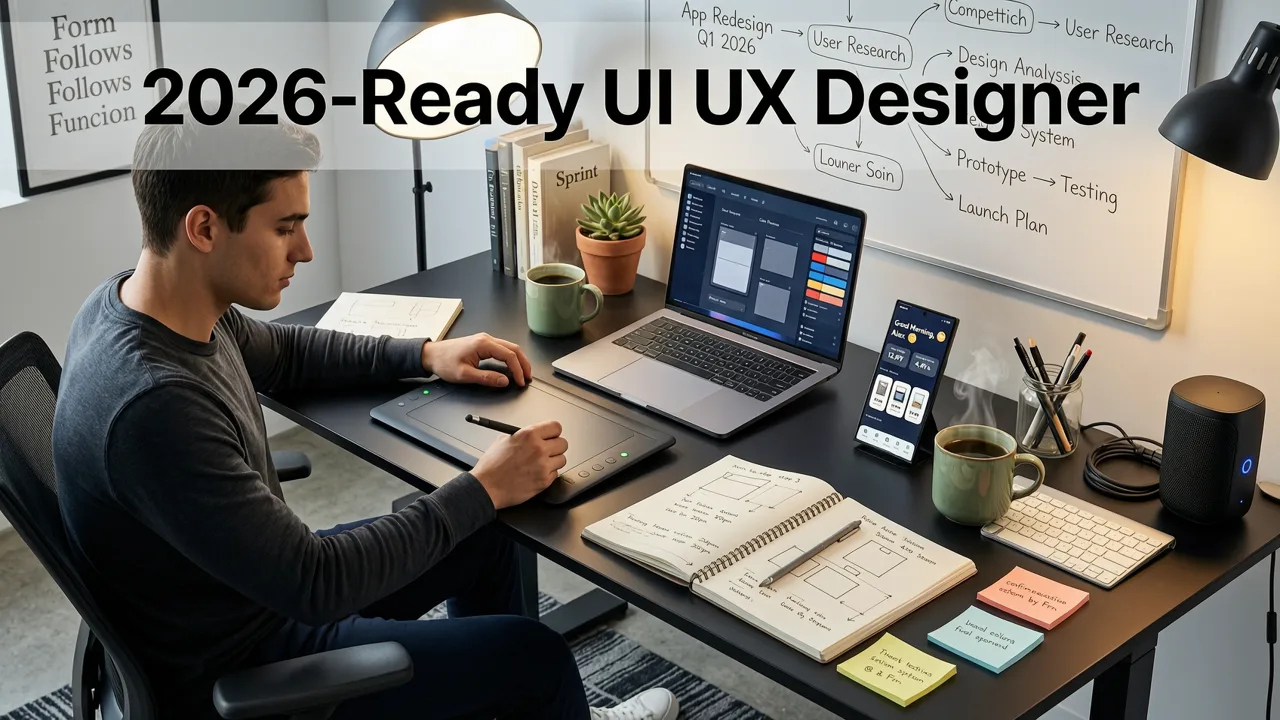
Gone are the days when ‘UI/UX designer’ meant Figma files and usability reports. The most effective designers working with startups and scaling businesses in 2026 operate at three intersecting levels:
1. Product Strategy Layer: From Wireframes to Growth Levers
A 2026-ready UI UX designer for app doesn’t wait for PRDs—they co-create them. They run discovery workshops to map user jobs-to-be-done (JTBD), pressure-test monetization flows against behavioral economics principles (e.g., loss aversion in subscription upgrades), and prototype variants of core journeys using tools like Framer + React Native Web for real-world validation.
This layer directly impacts your CAC and LTV. For example, one travel mobility client reduced customer acquisition cost by 41% after their Devsrank designer restructured the onboarding flow to surface value *before* asking for permissions—using progressive disclosure aligned with iOS 19’s privacy transparency requirements.
2. Platform Intelligence Layer: Native Feel, Cross-Platform Efficiency
Designers who only know ‘mobile-first’ are outpaced by those fluent in platform-intelligent design. That means:
- Leveraging iOS’s new Focus Filters to dynamically adjust UI density based on user context (work vs. personal mode)
- Using Android 16’s Adaptive Icons + Dynamic Color API to auto-generate brand-consistent app icons and theme palettes
- Applying platform-specific gesture logic—e.g., iOS’s ‘swipe back’ vs. Android’s ‘system back’—without breaking shared component libraries
This is why our cross-platform app design services embed platform-native UX integrity from sprint zero—not as a handoff, but as a co-engineering discipline.
3. Engineering Collaboration Layer: Design Systems That Ship
The biggest waste in app development isn’t overtime—it’s design-to-dev handoff debt. A modern UI UX designer for app owns a living design system: tokens, component status dashboards, Storybook integrations, and automated accessibility linting (via axe-core + Figma plugins).
They don’t just hand off PNGs. They export code-ready assets via tools like Supernova or Zeroheight, document interaction states in Notion-linked specs, and pair with engineers during sprint planning to scope feasibility early. One fintech client cut frontend dev time by 37% after integrating our designer’s tokenized design system with their React Native codebase.
How to Evaluate Candidates When You Hire UI UX Designer for App

Job boards and freelance platforms are flooded with ‘UI/UX designers’—but few understand the operational realities of shipping production apps in 2026. Use this 5-point evaluation framework before extending an offer:
- Portfolio depth over polish: Look beyond Dribbble shots. Ask for case studies showing how a design decision impacted a KPI (e.g., ‘How did changing the card layout affect scroll depth in your streaming app?’)
- Technical fluency test: Can they explain how their design choices impact bundle size, Core Web Vitals (for PWAs), or Firebase Analytics event modeling?
- Platform-specific evidence: Do their iOS projects use SF Symbols correctly? Do Android examples respect Material You’s dynamic color constraints? Bonus points for evidence of designing for foldables or wearables.
- Collaboration artifacts: Request samples of design system documentation, Jira-linked Figma comments, or Notion specs—not just static PDFs.
- Business-context questions: Did they ask about your ICP, monetization model, or top churn reasons *before* proposing solutions?
If a candidate can’t articulate how their work reduces support tickets or improves ASO keyword ranking, keep looking.
In-House vs. Agency vs. Freelancer: Which Model Fits Your 2026 App Goals?
Your choice depends less on budget—and more on velocity, risk tolerance, and strategic scope. Here’s how the models compare for hiring a UI UX designer for app in 2026:
| Model | Best For | Key Risks in 2026 | Time-to-Value (Avg.) | Cost Range (Monthly) |
|---|---|---|---|---|
| In-House | Established teams scaling >3 concurrent app initiatives; need deep product ownership | High opportunity cost (recruiting takes 72+ days avg. in 2026); rapid skill obsolescence without dedicated upskilling | 3–6 months (onboarding + ramp) | $8,500–$16,000+ |
| Specialized Agency (e.g., Devsrank) | Startups/SMEs launching first app or major redesign; need integrated strategy + execution + compliance | Requires clear scope definition upfront; less flexible for ad-hoc requests | 2–4 weeks (discovery → first interactive prototype) | $6,000–$14,500/project |
| Freelancer (Vetted) | Tight-budget MVP validation; single-feature optimization (e.g., onboarding revamp) | Scalability limits; no built-in QA, legal review, or cross-functional alignment | 1–3 weeks | $3,200–$7,800/project |
Note: All figures reflect 2026 market rates (adjusted for inflation, AI tool adoption, and rising demand for platform-specialized talent). Agencies like Devsrank often deliver faster time-to-value because our designers are embedded in product teams—not siloed—and have pre-vetted workflows for fintech, healthcare, and e-commerce verticals.
Red Flags to Avoid When You Hire UI UX Designer for App
Even well-intentioned hires can derail your app timeline. Watch for these 2026-specific warning signs:
- “I design for all platforms the same way.” → Ignores iOS 19’s spatial computing gestures and Android 16’s dynamic theming—guaranteeing platform friction.
- No mention of accessibility beyond contrast ratios. → WCAG 2.2 requires cognitive load reduction, motion sensitivity controls, and language simplicity—not just color checks.
- Portfolio lacks analytics integration. → If they haven’t tied design changes to GA4, Firebase, or Mixpanel outcomes, they’re optimizing for opinion—not evidence.
- Asks for full product spec before starting. → In 2026, great designers co-discover requirements using rapid prototyping—not wait for perfect docs.
- Can’t discuss ASO or web SEO implications. → App store screenshots, preview videos, and deep-linked UI patterns directly impact organic install rate and web referral traffic.
One healthcare client nearly launched with a designer who insisted on animated onboarding—until our audit revealed it violated HIPAA’s ‘minimum necessary data’ principle by loading unnecessary patient avatars before consent. That’s why we recommend a free mobile app UI UX audit before finalizing any hire.
How Devsrank Helps You Hire UI UX Designer for App—Without the Guesswork
We don’t sell ‘designer hours.’ We deliver design outcomes—aligned to your growth stage, industry, and technical stack. Here’s how it works:
Step 1: Context-First Discovery (No Templates)
We start with your business model—not your sitemap. Our team maps your user acquisition funnel, monetization levers, top drop-off points (from existing analytics or competitive benchmarks), and regulatory constraints. This shapes the designer’s mandate—not the other way around.
Step 2: Vertical-Specialized Matching
You won’t get a generic ‘mobile designer.’ You’ll be matched with a designer who’s shipped 3+ apps in your domain—whether that’s HIPAA-compliant remote patient monitoring, PSD2-compliant banking flows, or AR-powered retail try-ons. Our healthcare designers, for instance, maintain active certifications in ONC-certified EHR interoperability standards.
Step 3: Integrated Delivery—No Handoffs, No Silos
Your designer works alongside our product strategists, engineers, and ASO specialists. They co-write user stories, participate in sprint reviews, and validate designs against real device labs (iOS 19 beta devices, Android 16 foldables, Wear OS 4). Outputs include:
- Figma files with auto-synced design tokens and accessibility annotations
- Interactive prototypes tested on real user cohorts (via Maze or UserTesting)
- ASO-optimized screenshot sets and preview video storyboards
- Handoff packages with React Native / Swift / Kotlin component mappings
This is why 92% of clients who engage us to hire UI UX designer for app through our agency model ship their MVP within 12 weeks—and achieve ≥4.7-star average app store ratings at launch.
Conclusion: Hire UI UX Designer for App—But Hire for 2026 Reality
Hiring a UI UX designer for app in 2026 isn’t about filling a role. It’s about securing a strategic partner who bridges business ambition, technical feasibility, and human expectation—with measurable impact on retention, trust, and revenue. Generic design won’t cut it. Neither will designers who treat platforms as interchangeable canvases.
If you’re building in fintech, healthcare, e-commerce, on-demand, media, or travel/mobility—your app’s success hinges on design decisions made *before* the first line of code. Don’t settle for visual polish. Demand product intelligence, platform fluency, and growth accountability.
Ready to hire UI UX designer for app—with zero guesswork? Book a free 30-minute consultation with our product strategy team. Or, get immediate, actionable insights: request your free mobile app UI UX audit and receive a prioritized report within 5 business days.
Frequently Asked Questions
How much does it cost to hire UI UX designer for app in 2026?
What’s the difference between a UI UX designer for app and a generalist web designer?
Can I hire a UI UX designer for app remotely—and still get high-quality results?
How long does it take to hire UI UX designer for app and start seeing results?
Related topics
Need expert help?
Turn these insights into a better digital product.
Share your goals with our team and get a practical plan for design, development, performance, or growth.
Start a conversation