Why Your Business Needs a Specialized Healthcare Mobile App Development Company in 2026
In 2026, more than 73% of patients research healthcare providers, book appointments, and access medical records through mobile devices. If your healthcare mobile app is slow, non-compliant, or confusing, patients leave — and they don't come back. Devsrank is a healthcare mobile app development company that helps clinics, hospitals, telehealth startups, and healthtech businesses build iOS, Android, and cross-platform apps that are secure, scalable, and designed to convert.
Unlike generalist agencies, we combine deep product strategy, clinical UX research, HIPAA-aware engineering, and post-launch growth services including SEO and App Store Optimization (ASO) to help you ship faster and grow sustainably. This guide covers exactly what a modern healthcare mobile app development company delivers, what you should expect from a partner, and how to choose the right team for your project.
Healthcare Mobile App Development Services: What Modern Health Businesses Actually Need in 2026
Healthcare is not like fintech or e-commerce — the stakes are fundamentally different. A buggy checkout flow costs revenue; a buggy patient intake form can cost lives. That's why working with a healthcare mobile app development company that understands clinical workflows, regulatory obligations, and patient psychology is essential.
Here's what purpose-built healthcare app development includes at Devsrank.
1. Strategic Discovery — Not Just a Feature List
We start every engagement with a discovery sprint that maps your clinical workflows, patient journeys, and business goals. We interview stakeholders, review existing systems (EHR/EMR integrations, billing platforms, insurance APIs), and identify the gaps that an app can actually close. Too many agencies skip this phase and jump straight to wireframes. The result is an app that looks good but fails in production.
Our discovery process covers:
- Patient persona mapping and journey analysis
- Clinical workflow documentation (intake, triage, consultation, follow-up)
- Regulatory scoping (HIPAA, GDPR, FDA guidance for mobile medical apps where applicable)
- Integration architecture (HL7 FHIR, EHR APIs, pharmacy systems, lab networks)
- Competitive landscape and differentiation strategy
2. Compliance-First Architecture
In healthcare, compliance isn't a checkbox — it's the foundation. Every app we build is architected around data protection from day one. This means end-to-end encryption, role-based access controls, audit logging, secure authentication (including biometric and MFA), and infrastructure designed to meet HIPAA, GDPR, and regional health data regulations.
We also design for the evolving landscape of AI in healthcare. If your app includes AI-driven symptom checkers, diagnostic support, or clinical decision tools, we ensure the architecture supports responsible AI deployment, including transparency logs and clinician oversight workflows.
3. Patient-Centered UX/UI Design
Healthcare apps serve users who are often stressed, in pain, elderly, or managing chronic conditions. Generic design patterns don't work. Our UX team conducts usability testing with real patient populations and designs interfaces that prioritize clarity, accessibility (WCAG 2.2 AA compliance), and trust.
Key design principles we apply:
- Large, legible typography and high-contrast interfaces for aging users
- Voice-first and gesture-based navigation for accessibility
- Clear medication reminders and health tracking dashboards
- Frictionless appointment booking with real-time provider availability
- Secure, intuitive telehealth video consultation flows
4. Performance-First Engineering
Healthcare apps must work reliably — even on low-bandwidth connections in rural clinics or crowded hospital networks. We build with performance-first architecture using modern frameworks like React Native, Flutter, and native Swift/Kotlin where clinical requirements demand it.
Our engineering standards include offline-first capabilities, sub-two-second load times, real-time data synchronization, and robust error handling that never exposes sensitive patient data in logs or error messages.
5. Integration & Interoperability
Your app doesn't live in isolation. It needs to talk to EHR systems, insurance platforms, pharmacy networks, wearable devices, and lab systems. We specialize in healthcare interoperability using HL7 FHIR standards, SMART on FHIR protocols, and custom API integrations with platforms like Epic, Cerner, Allscripts, and Athenahealth.
6. Launch, SEO & ASO Support
Building the app is only half the equation. We help you launch with confidence through coordinated App Store Optimization, healthcare-specific SEO strategies, and web presence development. If you also need a patient-facing website or provider portal, our team can deliver responsive website development that aligns with your app experience.
Types of Healthcare Mobile Apps We Build
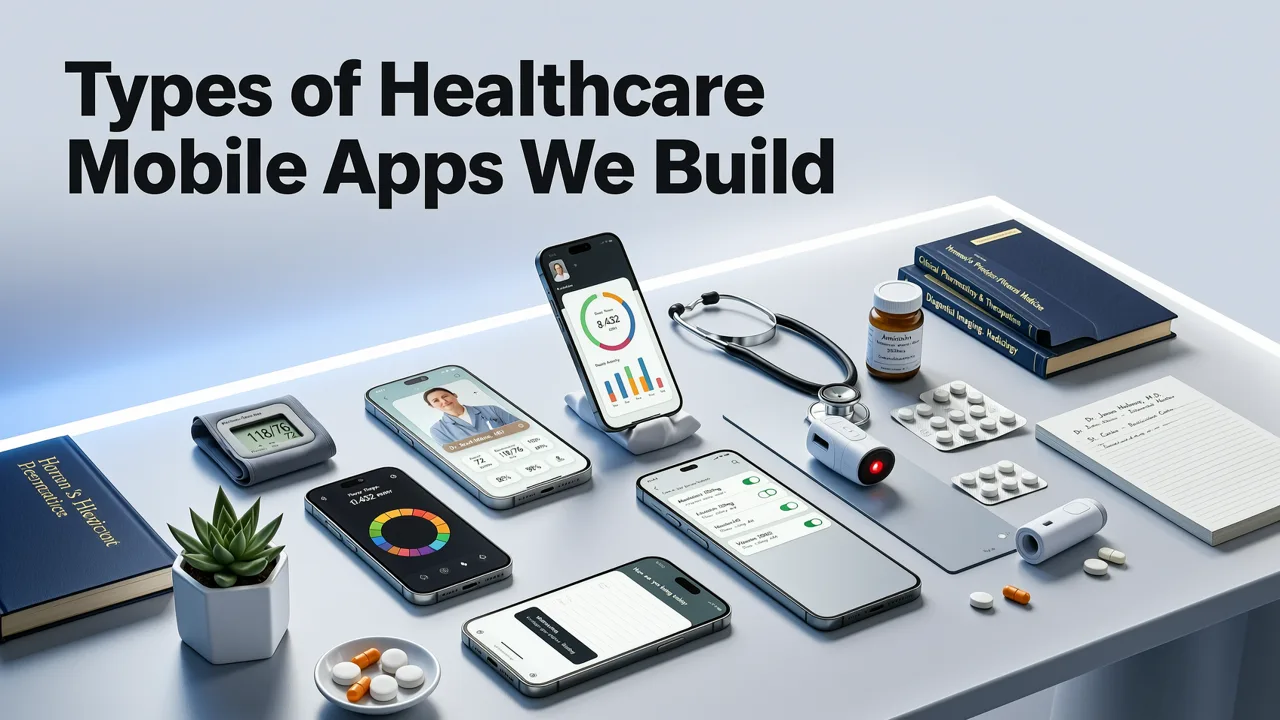
As a full-service healthcare mobile app development company, we serve a wide range of clients across the health ecosystem. Here are the most common categories we deliver:
| App Type | Target Users | Key Features |
|---|---|---|
| Telehealth & Virtual Care | Patients, Providers | Video consultations, e-prescriptions, scheduling, secure messaging |
| Patient Portal Apps | Patients | Medical records, lab results, billing, appointment management |
| Remote Patient Monitoring | Chronic care patients, Clinicians | Wearable integration, vitals tracking, alert systems, clinician dashboards |
| Pharmacy & Medication Apps | Patients, Pharmacies | Prescription refills, medication reminders, delivery tracking |
| Mental Health & Wellness | Consumers, Therapists | Mood tracking, guided therapy, crisis resources, session booking |
| Clinical Workflow Tools | Providers, Nurses, Admin | Shift scheduling, patient handoff, clinical documentation, task management |
| Health Insurance Apps | Members, Brokers | Claims filing, coverage lookup, provider search, ID card access |
| Fitness & Preventive Health | Consumers, Corporate wellness | Activity tracking, nutrition logging, goal setting, social challenges |
Our Healthcare App Development Process
We follow a structured, transparent process that keeps you informed at every stage. Here's how we take your healthcare app from concept to launch and beyond.
Phase 1: Discovery & Strategy (Weeks 1–3)
We conduct stakeholder interviews, map user journeys, define your MVP scope, and produce a product requirements document. We also perform a regulatory assessment to identify compliance requirements specific to your target markets.
Phase 2: UX/UI Design (Weeks 3–7)
Our design team creates wireframes, interactive prototypes, and a complete design system. We conduct usability testing with representative users — including patients with varying levels of digital literacy — before any code is written.
Phase 3: Development & Integration (Weeks 7–18)
Engineering sprints deliver working software every two weeks. We build your app alongside its backend infrastructure, integrate with your existing systems, and implement security controls. You receive demo builds at every sprint review.
Phase 4: QA, Compliance Audit & Testing (Weeks 18–21)
We run comprehensive testing including functional, performance, security, accessibility, and penetration testing. For regulated markets, we prepare documentation packages for HIPAA audits and, where required, FDA pre-submission guidance.
Phase 5: Launch & Growth (Ongoing)
We deploy to the App Store and Google Play, monitor performance, and iterate based on real user data. Our growth team supports ongoing SEO, ASO, and feature expansion. If your product also requires a web platform, we can deliver custom website development that extends your app's capabilities to the browser.
Technology Stack for Healthcare App Development in 2026
We choose technologies based on your specific clinical requirements, not trends. Here's a snapshot of the stack we commonly deploy for healthcare projects:
| Layer | Technologies |
|---|---|
| Mobile (iOS) | Swift, SwiftUI, UIKit |
| Mobile (Android) | Kotlin, Jetpack Compose |
| Cross-Platform | React Native, Flutter |
| Backend | Node.js, Python (Django/FastAPI), Go |
| Database | PostgreSQL, MongoDB (encrypted at rest) |
| Cloud & Hosting | AWS (HIPAA BAA), Google Cloud, Azure |
| Interoperability | HL7 FHIR R4/R5, SMART on FHIR, X12 EDI |
| AI/ML | TensorFlow, PyTorch, on-device Core ML |
| Security | AES-256 encryption, OAuth 2.0, biometric auth, MFA |
What Sets Devsrank Apart as a Healthcare Mobile App Development Company
The healthcare app market is crowded with agencies claiming clinical expertise. Here's why healthtech founders, hospital innovation teams, and clinic operators choose Devsrank:
- Regulatory fluency: We build HIPAA-compliant, GDPR-aware apps as standard practice — not as an expensive add-on.
- Clinical UX specialization: Our designers understand that healthcare users are not typical consumers. They're anxious, distracted, or managing complex conditions.
- Full-stack capability: From product strategy to app development, website development, SEO, and ASO — we're a single partner for your entire digital health presence.
- Transparent pricing: We offer clear scoping, fixed-price options for well-defined projects, and time-and-materials flexibility for evolving products. Learn more about our affordable custom development services.
- Post-launch growth: We don't disappear after launch. Our SEO and ASO teams help you acquire patients, improve retention, and scale.
Healthcare App Development Cost: What to Expect in 2026
Healthcare app development costs vary based on complexity, compliance requirements, and integrations. Here's a general range for 2026:
| App Complexity | Estimated Range (USD) | Timeline |
|---|---|---|
| Simple (appointment booking, basic patient portal) | $40,000 – $80,000 | 3–4 months |
| Medium (telehealth, medication management, wearable integration) | $80,000 – $180,000 | 5–8 months |
| Complex (RPM platforms, AI diagnostics, multi-system EHR integration) | $180,000 – $500,000+ | 8–14 months |
These ranges assume a professional, compliance-aware development partner. Offshore quotes significantly below these ranges often exclude the security, testing, and documentation work that healthcare apps demand. We recommend evaluating vendors on total cost of ownership — including maintenance, compliance audits, and scaling — not just initial development.
How to Choose the Right Healthcare Mobile App Development Company
Selecting a development partner for a healthcare app is a high-stakes decision. Use this checklist to evaluate potential vendors:
- Healthcare portfolio: Have they built apps in your specific vertical (telehealth, RPM, mental health, pharmacy)?
- Compliance track record: Can they demonstrate HIPAA, GDPR, or relevant regulatory experience with documentation?
- Integration expertise: Do they have proven experience with EHR systems and HL7 FHIR?
- Design process: Do they conduct usability testing with actual patients, not just internal teams?
- Security practices: Do they perform penetration testing and maintain security certifications?
- Post-launch support: Will they support ongoing maintenance, updates, and growth marketing?
- Communication: Do they provide transparent progress reporting and sprint demos?
A partner that checks all these boxes will save you time, reduce regulatory risk, and deliver an app that patients and providers actually want to use.
Industries & Clients We Serve
As a healthcare mobile app development company, we work with organizations across the health ecosystem:
- Hospital systems and multi-specialty clinics
- Telehealth and virtual care startups
- Remote patient monitoring and digital therapeutics companies
- Pharmacy chains and independent pharmacies
- Mental health platforms and wellness brands
- Health insurance providers and TPAs
- Medical device companies launching companion apps
- Corporate wellness programs
Frequently Asked Questions
We've compiled answers to the most common questions we receive from healthcare founders and innovation teams evaluating app development partners.
Start Building Your Healthcare App with Devsrank
Choosing the right healthcare mobile app development company can determine whether your product transforms patient care or becomes another abandoned project. Devsrank combines clinical-grade engineering, patient-centered design, and regulatory expertise to help you build an app that patients trust, providers rely on, and regulators approve.
Whether you're a startup launching your first telehealth MVP or an established hospital system modernizing your patient experience, our team is ready to help. Contact Devsrank today for a free discovery call and let's map out your healthcare app strategy for 2026 and beyond.
Frequently Asked Questions
What makes a healthcare mobile app development company different from a general app agency?
How much does healthcare mobile app development cost in 2026?
Does Devsrank build HIPAA-compliant healthcare apps?
Can Devsrank integrate my app with existing EHR systems like Epic or Cerner?
How long does it take to develop a healthcare mobile app?
Related topics
Need expert help?
Turn these insights into a better digital product.
Share your goals with our team and get a practical plan for design, development, performance, or growth.
Start a conversation