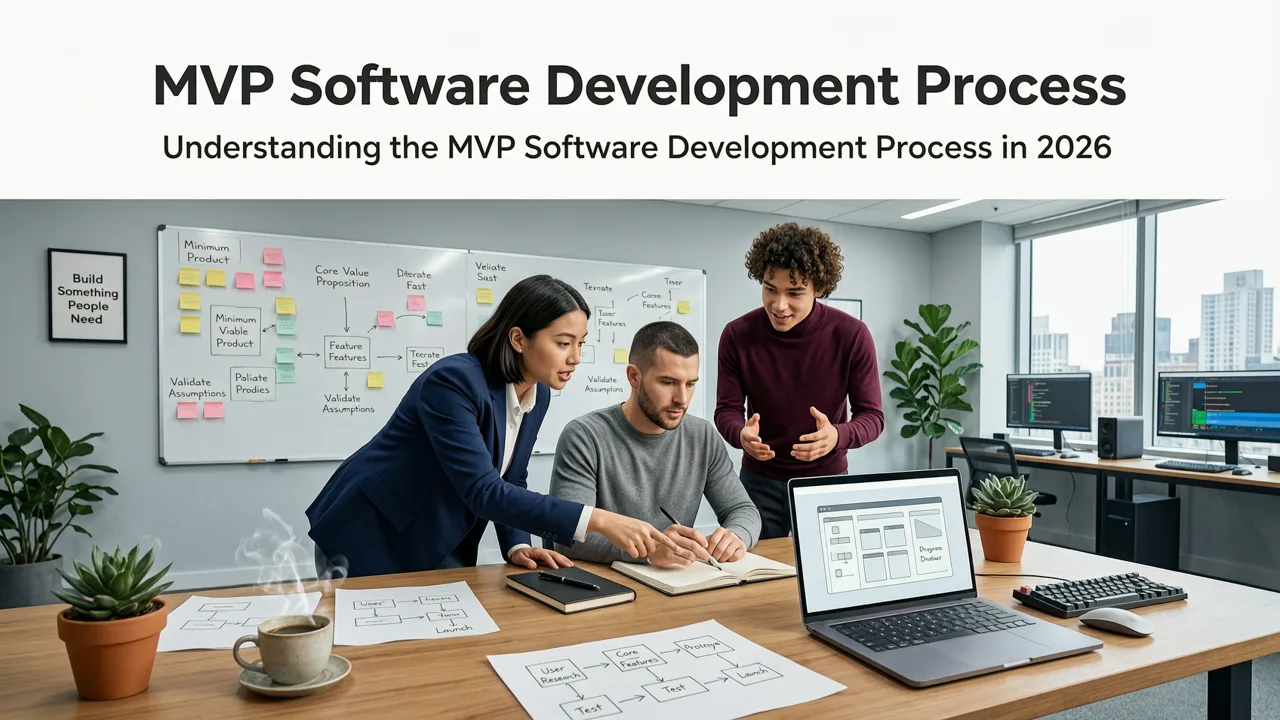
Understanding the MVP Software Development Process in 2026
In today’s hyper-competitive digital landscape, launching a product without validating core assumptions is a risk few startups can afford. The mvp software development process provides a structured, strategic pathway to test your product hypothesis with real users while minimizing time and financial investment. Rather than building a fully-featured application on guesswork, a Minimum Viable Product (MVP) focuses on delivering core value, gathering actionable feedback, and iterating based on actual market demand.
In 2026, the mvp software development process has evolved beyond simply coding a bare-bones app. It now encompasses deep product strategy, advanced UI/UX design, scalable cross-platform engineering, and post-launch App Store Optimization (ASO). For startups and growing businesses, executing this process correctly is the difference between a product that stalls and one that scales sustainably.
Phase 1: Strategic Discovery and Product Validation
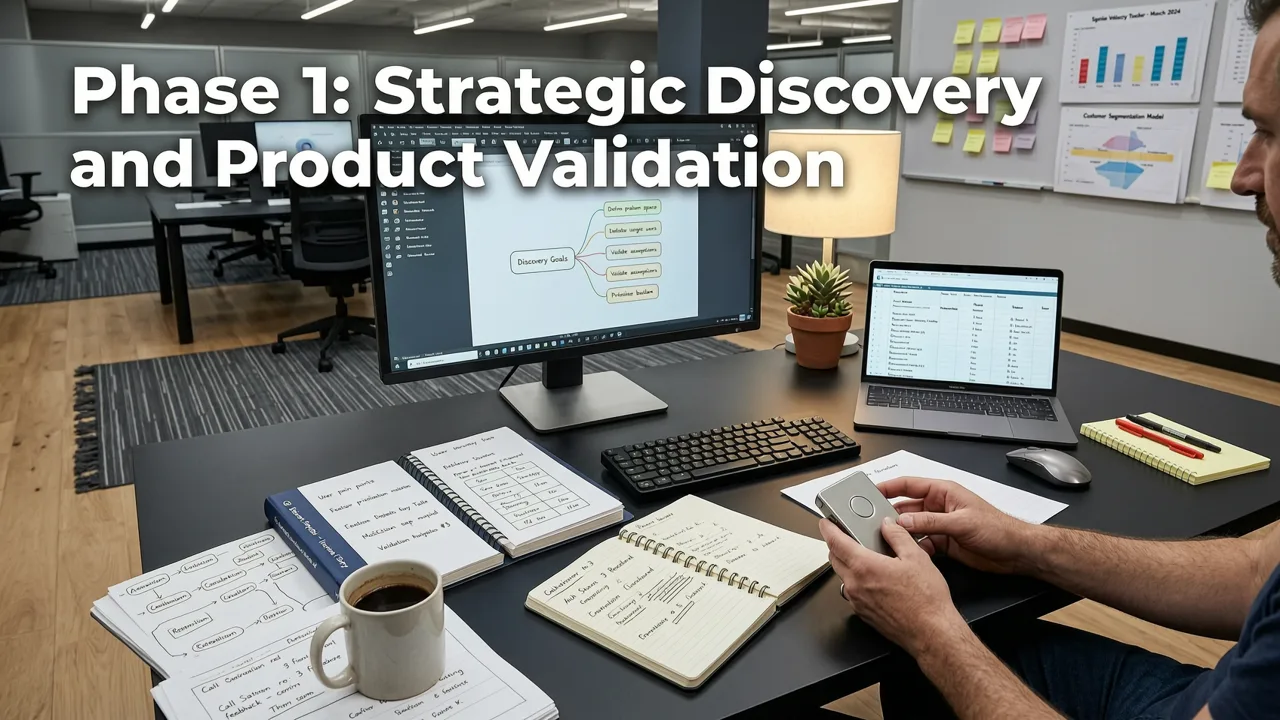
Every successful digital product begins long before the first line of code is written. The discovery phase is about aligning business objectives with user needs. This stage involves comprehensive market research, competitor analysis, and the creation of detailed user personas.
Defining the Core Value Proposition
Startups must identify the single most critical problem their product solves. By stripping away secondary features, teams can focus engineering resources on the functionalities that truly matter to early adopters. This strategic clarity prevents feature creep—a common pitfall where unnecessary additions delay launch and inflate budgets.
Technical Feasibility and Architecture Planning
During discovery, engineering leads evaluate the technical requirements of the MVP. This includes selecting the right technology stack, planning cloud infrastructure, and ensuring compliance for regulated industries like fintech and healthcare. Partnering with a strategic custom website development agency or app development partner during this phase ensures that your technical foundation is built for long-term scalability, not just short-term survival.
Phase 2: UI/UX Design and Prototyping
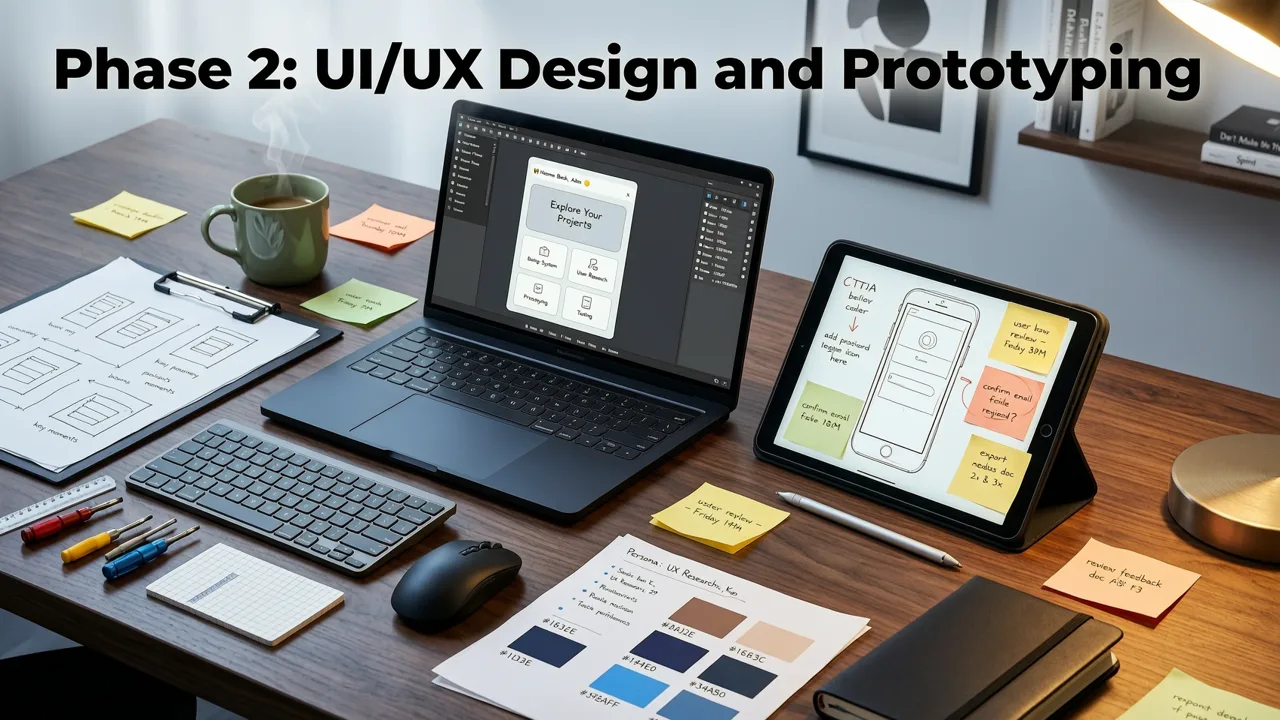
User experience dictates product adoption. In 2026, users expect seamless, intuitive interfaces across all devices. The design phase translates strategic requirements into visual and interactive realities.
Wireframing and User Flows
Designers map out the user journey, ensuring that critical tasks can be completed in the fewest possible steps. Low-fidelity wireframes establish the layout and navigation structure without the distraction of colors or branding.
High-Fidelity Prototyping
Interactive prototypes are then created using tools like Figma. These clickable models allow stakeholders and potential users to experience the product flow before development begins. Testing these prototypes with a small focus group can uncover usability issues early, saving significant rework costs during the engineering phase.
Phase 3: Agile Engineering and Core Feature Build
With validated designs and a clear technical roadmap, the engineering phase begins. Modern mvp software development process workflows rely heavily on agile methodology, allowing teams to build, review, and adapt in short iterations known as sprints.
Selecting the Right Technology Stack
Choosing between native and cross-platform frameworks is a critical decision. While native development (Swift for iOS, Kotlin for Android) offers maximum performance, cross-platform solutions like Flutter and React Native have matured significantly. They now allow startups to deploy to both iOS and Android simultaneously from a single codebase, drastically reducing time-to-market and development costs.
Building the Web Component
Most mobile-first strategies also require a robust web presence for marketing, user onboarding, or dashboard access. Integrating website development services for startups alongside mobile app engineering ensures a cohesive ecosystem. Whether you need a simple landing page or a complex customer portal, the web architecture must align with the mobile app’s backend and database structure.
Phase 4: Testing, QA, and Pre-Launch Optimization
Quality assurance is not a final step; it is integrated throughout the agile development cycle. However, a dedicated pre-launch QA phase ensures the MVP is stable, secure, and performant.
Automated and Manual Testing
Automated testing scripts handle repetitive tasks like regression testing, while manual testing focuses on exploratory scenarios and edge cases. For applications handling sensitive data, rigorous security audits and penetration testing are mandatory to protect user privacy and maintain regulatory compliance.
Performance Optimization
App load times, API response speeds, and battery consumption are rigorously measured. In 2026, user tolerance for lagging interfaces is virtually zero. Optimizing the codebase and implementing efficient caching strategies ensure the MVP performs flawlessly even on older devices or slower network connections.
Phase 5: Launch, ASO, and Iterative Scaling
Deploying the MVP to the Apple App Store and Google Play Store is just the beginning of the product lifecycle. A successful launch requires strategic visibility and a framework for continuous improvement.
App Store Optimization (ASO)
ASO is the SEO of the mobile app world. It involves optimizing the app title, subtitle, description, and visual assets (icons and screenshots) to rank higher in store search results. Effective ASO drives organic downloads, reducing reliance on paid user acquisition during the critical early stages.
Gathering Feedback and Iterating
Once the MVP is live, analytics tools track user behavior, feature adoption, and drop-off points. This data forms the basis for the next development cycle. Startups must remain agile, prioritizing the features and fixes that users actually request rather than what internal stakeholders assume is necessary.
Comparing Technology Approaches in the MVP Software Development Process
Selecting the right development approach is crucial for balancing budget, timeline, and performance. The following table compares the primary methodologies available for building an MVP in 2026.
| Approach | Best Used For | Pros | Cons |
|---|---|---|---|
| Cross-Platform (Flutter/React Native) | Startups needing both iOS and Android apps quickly | Single codebase, faster time-to-market, cost-effective, highly mature in 2026 | May require native modules for highly specialized hardware features |
| Native iOS & Android | Apps requiring maximum performance, complex animations, or deep OS integration | Best possible performance, full access to device capabilities, premium user experience | Higher costs, longer development time, requires maintaining two separate codebases |
| Progressive Web App (PWA) | Content-heavy apps, e-commerce, or businesses with limited mobile budgets | No app store approval needed, instant updates, highly discoverable via search engines | Limited access to native device features (e.g., advanced Bluetooth, biometrics) |
For many startups, a cross-platform approach offers the ideal balance. However, if your MVP is heavily focused on digital retail, integrating specialized ecommerce website development services alongside your mobile strategy can create a unified, high-converting omnichannel experience.
Avoiding Common Pitfalls in MVP Development
Even with a solid plan, startups can stumble during the mvp software development process. Being aware of common pitfalls allows teams to navigate around them effectively.
- Succumbing to Feature Creep: Adding "just one more feature" before launch is the fastest way to exhaust your budget. Stick strictly to the core value proposition defined in the discovery phase.
- Neglecting Post-Launch Strategy: Building the product is only half the battle. If you do not have a plan for ASO, marketing, and user feedback collection, your MVP will struggle to gain traction.
- Compromising on Architecture for Speed: While an MVP should be lean, the underlying technical architecture must be scalable. Writing quick, messy code to save time now will result in massive technical debt that makes future updates expensive and difficult.
- Ignoring Budget Realities: Understanding the true cost of development is vital. Exploring affordable custom website development services and strategic engineering partnerships can help maximize your runway without sacrificing the quality of the final product.
Building a Foundation for Sustainable Growth
The mvp software development process is ultimately about learning. It is a mechanism to test your business model in the real world with minimal risk. By combining strategic discovery, user-centric design, agile engineering, and data-driven iteration, startups can transform a simple concept into a market-ready product that resonates with users.
Whether you are disrupting fintech, streamlining healthcare, or launching the next great on-demand delivery platform, the principles of a successful MVP remain constant: focus on core value, build strategically, and let user data guide your evolution. When you are ready to bring your vision to life, partnering with an experienced development team ensures that your MVP is not just a prototype, but a scalable foundation for your future success.
Frequently Asked Questions
How long does the mvp software development process typically take in 2026?
What is the difference between an MVP and a prototype?
Should I build a native app or a cross-platform app for my MVP?
How do I prevent feature creep during MVP development?
What happens after the MVP is launched?
Related topics
Need expert help?
Turn these insights into a better digital product.
Share your goals with our team and get a practical plan for design, development, performance, or growth.
Start a conversation